When planning your home gym, one crucial question arises: "How much space do I need for a full power rack setup?" According to fitness expert Mike Matthews, "A power rack requires ample room for safety and movement." This reflects the importance of understanding your space requirements.
A full power rack typically needs a minimum of 7 feet in height and 4 to 6 feet in width. This allows for exercises like squats and bench presses. However, you should also consider surrounding space for safety and mobility. A cramped area may hinder your workout experience. You might need even more space for accessories and equipment storage.
Think about organizing your gym effectively. This means not just fitting a rack, but creating a functional area. Sometimes, people underestimate the importance of space. Be prepared to adjust your expectations. It’s better to have a little extra room than to feel confined. A well-planned setup not only enhances safety but also motivates you to train regularly.
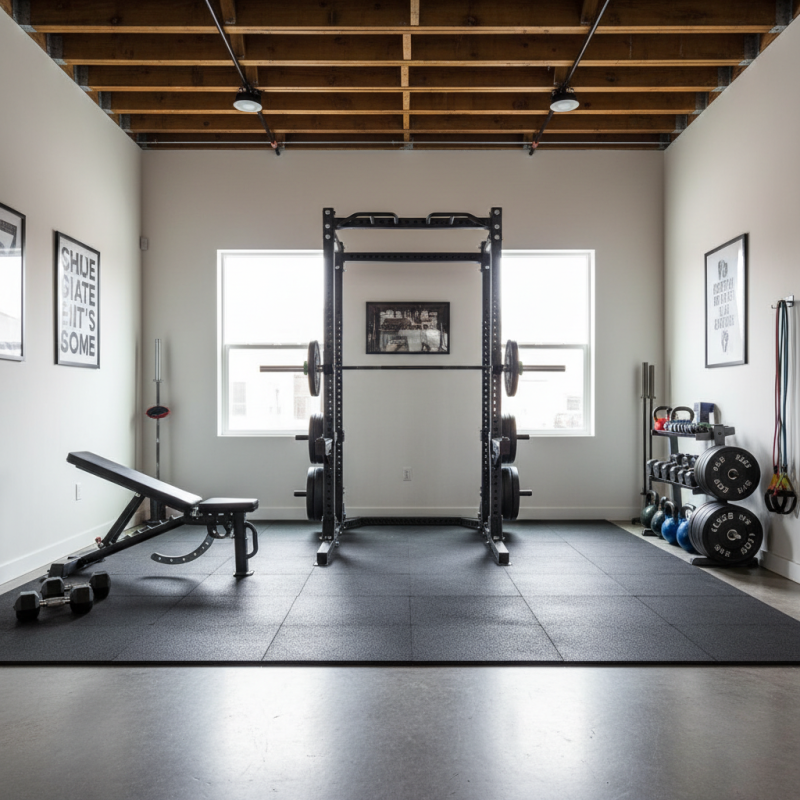
When setting up a full power rack, space is crucial. A standard power rack requires a minimum area of 6 feet by 6 feet. This space allows for movements like squats, bench presses, and deadlifts. More room is ideal for safe navigation around the rack. Think about ceiling height too; many exercises involve lifting overhead.
Tips: Always measure your available space. Visualize the setup before moving heavy equipment. It's better to have extra space than to struggle within tight quarters.
Consider the flooring as well. A solid, non-slip surface is vital for stability. Don’t overlook additional equipment either, like weights and benches. Planning the layout in advance can prevent headaches later on. Compromises may be necessary, but ensuring mobility is non-negotiable.
When planning a full power rack setup, understanding dimensions is crucial. A standard full power rack typically measures about 7 feet tall, 4 feet wide, and 4 feet deep. This size allows for a significant workout area, accommodating various exercises like squats, bench presses, and deadlifts. According to the National Strength and Conditioning Association, adequate space helps reduce injury risks during workouts.
When considering floor space, the area needed can be larger than just the rack's dimensions. Ideally, an area of at least 10x10 feet is recommended. This space offers room for movement, additional equipment, and safety. Many users overlook this aspect, leading to cramped setups. A 2019 report by the American Council on Exercise highlights that cramped spaces can impede workout effectiveness and safety.
It’s essential to reflect on your specific workout routine. For instance, exercises requiring a spotter need more space. If you're limited on room, consider alternative configurations or foldable racks. That's a practical approach, yet it requires careful planning to avoid frustration during workouts. Adequate space also encourages consistency and motivation, essential factors in achieving fitness goals.
| Dimension | Recommended Size | Notes |
|---|---|---|
| Height | 7 ft (213 cm) | Standard height for most racks |
| Width | 4 ft (122 cm) | Provides stability and space for accessories |
| Depth | 5 ft (152 cm) | Accommodates barbell movement |
| Floor Space | 20 sq ft (1.86 sq m) | Recommended for a full setup |
| Ceiling Height | 8 ft (244 cm) | Minimum height to avoid issues |
When planning space for a full power rack setup, additional equipment is often overlooked. You will need room for your barbell, weights, benches, and other accessories. Consider the dimensions of each piece. A standard barbell is about 7 feet long. Weights can take up considerable floor space as well.
Safety is another concern. Ensure enough space around the rack for movement. Ideally, aim for at least 3 feet of clearance on all sides. This allows you to perform exercises without the risk of hitting other equipment or walls. Consider adding mats for floor protection and to prevent injuries.
Think about storage options. Weight plates can be stored on a mat, wall, or dedicated rack. Customize your space based on your workout style and preferences. It might feel cramped at first. Evaluate how you move through your exercises. Adjust as needed to enhance your workout experience.
When setting up a full power rack, one must carefully evaluate the floor space and ceiling height. A power rack typically requires a significant footprint, usually around 4 feet by 6 feet. This space allows for safe movements, including squats and bench presses. It is crucial to measure the area accurately. A cluttered gym can lead to injuries. Organizing the surrounding space enhances safety and accessibility.
Ceiling height is another vital factor. Ideally, a minimum height of 8 to 9 feet is necessary. This height accommodates overhead lifts and avoids any risk of hitting the ceiling. Insufficient height can create an uncomfortable workout environment. Consider your body type and lifting style as well. Taller individuals may need even more space. Adjust the positioning of the rack to ensure freedom of movement.
Reflect on your workout area regularly. Space needs may change as you acquire new equipment. Keep an eye on the usage patterns. If you notice constraints, think about rearranging or downsizing some items. A safe and efficient setup leads to better training results. Proper planning can transform a cramped space into an ideal training ground.
This chart illustrates the recommended dimensions for setting up a full power rack. The width is suggested to be 7 feet, the depth 5 feet, and the height 8 feet, ensuring safe and effective usage in designated workout spaces.
When optimizing your home gym layout with a power rack, space management is vital. A power rack typically requires at least 6 feet of clearance in height and a footprint of about 4 feet by 6 feet. This means you need to consider the area around the rack for safety and movement. Keeping ample space ensures you can perform exercises like squats and bench presses without restriction.
Incorporating other gym equipment is important, too. Consider placing a bench within easy reach of the rack. This setup allows for a seamless transition between different exercises. You might find that you need to adjust your arrangement as your training evolves. Create zones for different equipment, like free weights or cardio machines. This tactical layout fosters efficiency while minimizing clutter.
Don’t overlook the importance of lighting and ventilation. A well-lit area enhances your focus, while fresh air can boost your performance. Many overlook these aspects initially. Reflect on how these elements can impact your workout motivation. Over time, the layout may need tweaking as your workout routine or equipment changes. Adaptability is key to maintaining an effective home gym environment.
: A standard full power rack measures around 7 feet tall, 4 feet wide, and 4 feet deep.
Ideally, at least 10x10 feet of space is recommended for movement and safety.
Sufficient space reduces injury risks and facilitates effective workouts.
A cramped space can impede workout effectiveness and increase injury risks.
Consider alternative configurations or foldable racks to maximize your workout area.
A minimum ceiling height of 8 to 9 feet is ideal for overhead lifts and comfort.
Regularly evaluate your space and organize to enhance safety and accessibility.
Keep an eye on usage patterns and consider rearranging or downsizing as necessary.
Proper planning helps avoid frustration and enhances workout consistency and motivation.
Adjust the rack's positioning to ensure enough freedom of movement based on your height.
When considering "How much space do I need for a full power rack setup?", it's essential to evaluate several factors. First, understanding the dimensions of the power rack itself is crucial. A standard power rack typically requires a footprint of around 4 feet by 6 feet, but this may vary based on the specific model and any additional attachments.
Beyond the rack, it’s important to account for surrounding equipment such as benches or weights, which will require extra space for safe usage. Additionally, evaluating your floor area and ceiling height will ensure that exercises can be performed without restrictions. Finally, optimizing your home gym layout can enhance your workout experience, making it both functional and enjoyable. By carefully considering these aspects, you can create an efficient and safe environment for your training.

PNZ Fitness