Living in a small apartment does not mean abandoning strength training, cycling, or daily movement. It means treating every square meter as working space. A yoga mat beside the sofa, adjustable dumbbells under a bed, and resistance bands inside a drawer can coexist with ordinary living. The challenge is control. Equipment must remain accessible without becoming visual clutter.
Professional organizer Peter Walsh once said, “Clutter is not just physical stuff. It’s anything that gets between you and the life you want to be living.” That idea fits this topic closely. When asking, “How to store gym equipment in a small apartment?”, begin with honest observation. Which items do you use weekly? Which pieces remain untouched for months? Storage should follow real habits, not an attractive internet image.
This 2026 guide explores compact racks, wall-safe organizers, under-bed containers, and furniture with hidden compartments. It also considers weight, ventilation, noise, and safe access. A heavy kettlebell should not sit on a weak shelf. Damp workout clothing should not stay sealed beside foam rollers. Small details matter.
Some solutions will look imperfect. That is normal. A neat corner may still feel crowded. A storage bench may become a laundry pile. The best system is adjustable, visible, and easy to reset after training. Leave walking space. Protect the floor. Keep emergency exits clear. Your apartment should support exercise, not resemble a warehouse.
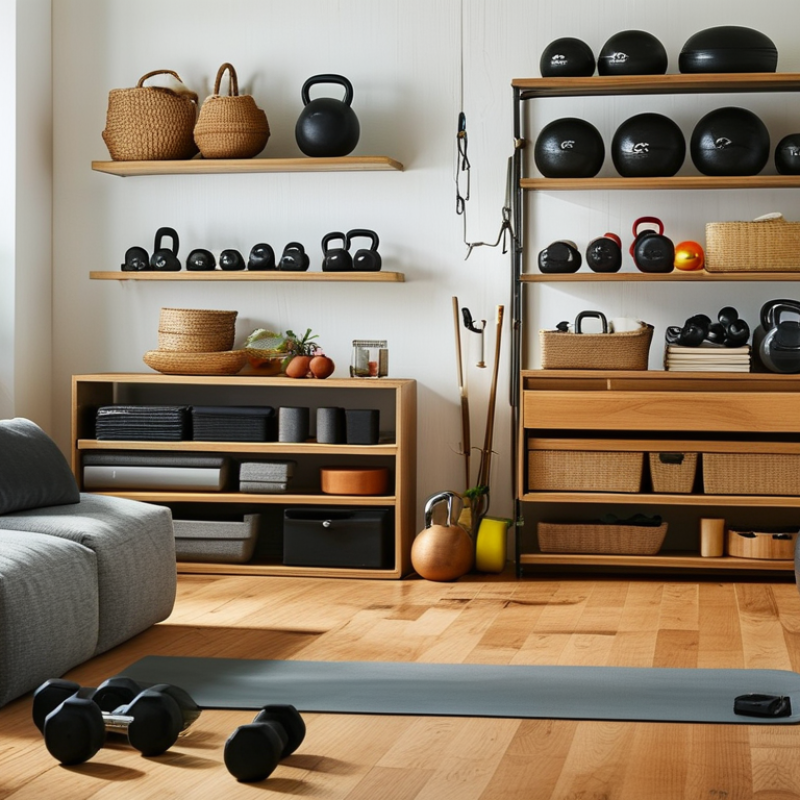
Assess Your Space and Gym Equipment Storage Needs
Start with a measured inventory, not a shopping list. Record each item’s length, width, height, and folding clearance. Then measure doorways, ceiling height, and usable wall space.
A yoga mat may roll neatly, while adjustable weights need a stable, low shelf. Leave walking routes clear. In a 500-square-foot apartment, even a 24-inch storage tower can obstruct a narrow hallway. That detail matters more than an attractive floor plan.
The 2025 ACSM Worldwide Survey of Fitness Trends continues to identify home-based exercise as an important fitness direction. Meanwhile, the 2023 IHRSA Global Report recorded about 184 million fitness facility members worldwide. These figures suggest varied training habits, not one universal storage solution.
Match storage to your actual routine: resistance bands can use a compact wall rail, while a bench may need vertical placement behind a door. Keep heavier equipment near the floor to reduce lifting risks.
My first measurements are often wrong. I sometimes forget space for handles, cables, or a fully opened bench. Recheck everything with the equipment unfolded. Also inspect wall construction before installing hardware. A weak anchor can damage plaster or fail unexpectedly. Storage should support training, not compete with it.
Small-apartment gym storage should preserve usable space, not simply hide equipment. I learned this after leaving a dumbbell beside the sofa. One careless step nearly caused a fall. Measure your walking paths before buying storage. Keep frequently used items within easy reach, while heavier equipment stays low and stable.
Vertical storage often creates the most floor space. A narrow rack can hold dumbbells, kettlebells, and small plates against one wall. Check the rack’s weight capacity and secure it properly. For rental homes, freestanding options may be safer than drilling into walls.
Foldable benches can slide behind a door or under a bed. Resistance bands fit inside a small ventilated basket. Yoga mats can stand in a slim corner holder.
Under-bed containers work well for jump ropes, ankle weights, and towels. Choose containers with firm lids, but allow equipment to dry before storing it. Sweat trapped in a closed box can create unpleasant odors and damage fabric. My setup is not perfect. The mat still rolls open sometimes. I now place a simple strap beside it and inspect fasteners every month. Leave clearance around door hinges, heaters, and electrical outlets. A storage plan should make the next workout easier, not turn the apartment into an obstacle course.
In a small apartment, organize gym equipment by frequency of use and weight. ACSM’s Worldwide Survey of Fitness Trends 2025 ranked traditional strength training fifth. That supports keeping dumbbells and resistance bands easy to reach. The World Health Organization recommends 150–300 minutes of moderate activity weekly. Store your most-used items near the workout area, not behind seasonal belongings.
Place heavy equipment on the lowest shelf or floor. Keep dumbbells against a wall, with 5–10 centimeters of clearance for cleaning. Store lighter bands, jump ropes, and ankle straps in labeled containers at chest height. A compact vertical rack can save floor space, but it must remain stable. Avoid placing heavy weights overhead. That choice often looks efficient, yet it creates unnecessary handling risks.
Tips: Create three zones: daily, weekly, and occasional use. Use a small basket for daily accessories. Put heavier items closer to the wall. Leave a clear path around every piece. I still misjudge storage space sometimes. Measure the equipment, including handles, before buying containers. Review the setup monthly. If an item stays untouched for several weeks, move it farther away. Keep a simple weight label on each container, because guessing becomes frustrating after a hard workout.
Small apartments need storage zones that serve more than one purpose. A hallway corner can hold resistance bands, while a bench can function as seating. Keep heavier equipment low and lighter items at shoulder height. This reduces lifting strain and prevents unstable piles.
Measure each space before buying containers or shelves. Leave a clear walking path around exercise areas. Store weights on a firm, level surface, not directly beside loose cables. Tall shelving should be secured properly, especially in homes with children or pets. Ventilated baskets can hold damp towels and washable mats without trapping odors. A small wall rail may organize bands, jump ropes, and heart-rate accessories in one visible place.
Visibility matters. If equipment disappears behind boxes, workouts become less likely. I once stored a folding step under my bed, but retrieving it felt inconvenient. The arrangement failed.
Try again.
A practical zone might include a washable floor mat, a narrow cabinet, and a folding stool. Use labels with simple words, such as “warm-up” or “strength.” Check hinges, straps, and shelf fasteners regularly. Replace damaged parts before they create a hazard. Do not overload furniture beyond its stated capacity. Storage should support movement, not crowd it. A little empty space is useful.
A small-apartment gym should be maintained as a working system, not a forgotten storage corner. The American College of Sports Medicine’s 2025 Worldwide Survey of Fitness Trends ranked wearable technology first. It reflects a wider shift toward measurable, trackable training. Keep a timer, training log, or heart-rate device visible and charged. Measure walking clearance each month. I assign every item a marked home. Mats roll vertically, bands hang dry, and weights stay on the lowest shelf. This sounds obvious. Good systems often are.
The 2024 SFIA Topline Report recorded 242.3 million Americans participating in at least one sport or fitness activity in 2023. More activity means more equipment entering homes, even when rooms stay small. Update storage after every new purchase. Remove duplicates, label loose parts, and keep a clear path around heavy equipment. Check screws, stitching, foam, and elastic tension every quarter. Replace damaged pieces; do not hide them in a basket. I once kept a cracked handle for “later.” That decision created clutter and a real trip hazard.
The 2025 survey also placed exercise programs for older adults near the top of its trends. That matters in shared apartments. Storage should support changing strength, balance, and mobility needs. Place light bands and mobility tools between waist and shoulder height. Store heavier items below knee level. Review the layout after illness, schedule changes, or a new routine. If reaching feels awkward, the system needs revision. Not every update will work. Record what fails, then adjust the shelf, hook, or routine.
: Record each item’s length, width, height, and folding clearance. Measure doorways, ceilings, walls, and walking routes. Measure twice. Recheck benches with handles and cables fully opened.
Vertical storage can preserve valuable floor space. A narrow rack may hold weights and small plates against one wall. A 24-inch tower can still block a hallway in a 500-square-foot apartment. Check the actual path.
Place heavy items on the floor or lowest shelf. Keep weights stable and close to the wall. Avoid overhead storage. Leave 5–10 centimeters for cleaning and safe handling.
Create daily, weekly, and occasional-use zones. Keep regular items near your workout area. Store seasonal equipment farther away. Use a small basket for daily accessories. This saves time.
Inspect the wall construction before attaching hardware. Weak anchors can damage plaster or fail unexpectedly. Freestanding storage may suit rental homes better. Keep every rack stable.
Use labeled containers or a compact ventilated basket. Store bands, ropes, and ankle straps at chest height. Dry equipment before closing the container. Trapped sweat can create odors and damage fabric.
A folding bench may fit behind a door or under a bed. Store a rolled mat in a slim corner holder. Leave room around hinges, heaters, and outlets. The mat still rolls open sometimes.
Inspect fasteners and clear walking routes every month. Move untouched items into occasional-use storage. Label containers with their weights. My measurements are not always right. A monthly review catches small mistakes before they become obstacles.
Learning how to store gym equipment in a small apartment starts with assessing the available space, measuring storage areas, and identifying which items need the most room. Compact solutions such as wall-mounted racks, foldable benches, stackable containers, vertical shelves, and under-bed storage can help maximize unused areas without making the apartment feel crowded. The goal is to keep equipment secure while preserving clear walking paths and comfortable living space.
Organize equipment by frequency of use and weight, keeping daily essentials within easy reach and heavier items on stable, lower shelves. Create safe, accessible, multi-purpose storage zones that can serve as workout areas when needed and regular living spaces afterward. Regularly inspect equipment, remove items that are no longer useful, and update the arrangement as your routines change. With thoughtful planning and consistent maintenance, How to store gym equipment in a small apartment? becomes a practical question with a flexible, organized answer.
PNZ Fitness