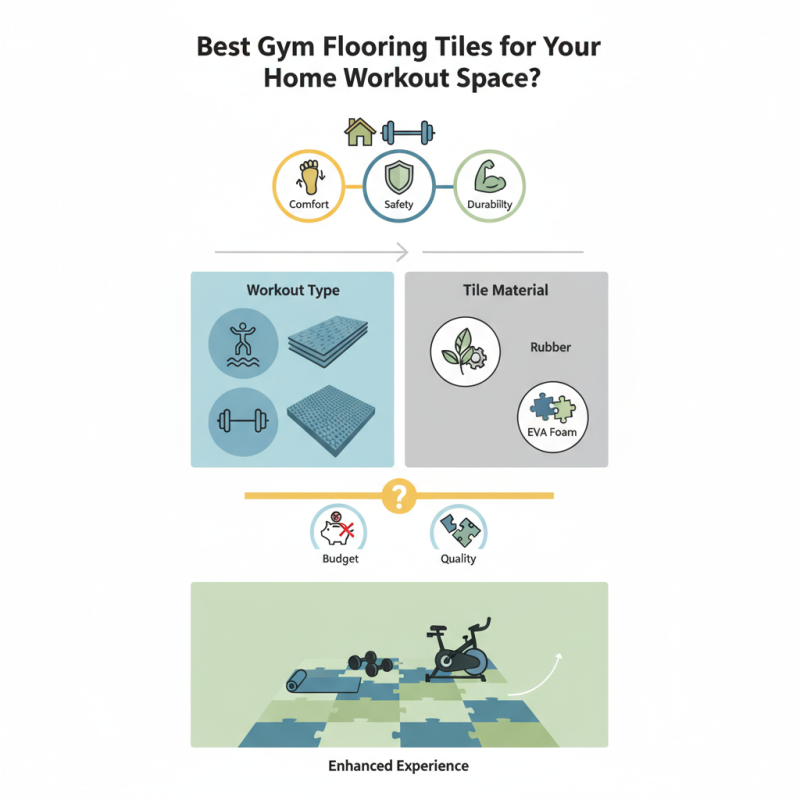
Creating a home workout space is an exciting venture. One of the most critical aspects is choosing the right flooring. Gym flooring tiles can make a significant difference in both functionality and aesthetics. These tiles must provide comfort, safety, and durability.
When selecting gym flooring tiles, consider your workout type. For high-impact activities like dancing or cardio, thicker tiles offer better shock absorption. Tiles made from rubber are an excellent choice for weightlifting areas, as they protect your subfloor from damage. Visualize a clean, modern space where you feel motivated to exercise.
However, finding the perfect tiles can be challenging. Many options are available, with various textures and colors. It is easy to feel overwhelmed. Some tiles may not fit your budget, while others could compromise quality. Reflect on what you truly need, and don’t rush the process. Making the right choice can enhance your home gym experience significantly.
Selecting the Right Type of Gym Flooring Tiles for Your Home Workout
Creating the right workout environment at home starts with choosing the best flooring. Selecting gym flooring tiles involves understanding your workout needs. Research shows that about 72% of home gym users prefer flooring that provides a good grip and cushioning. This is crucial for exercises ranging from yoga to high-intensity interval training.
Rubber tiles are a popular choice. They are durable and absorb impact well. Studies indicate that rubber flooring reduces the risk of injuries by 30% during high-impact workouts. On the flip side, some users find rubber tiles can hold odors over time. It’s important to ensure proper ventilation in your workout space to counteract this issue.
Foam tiles are another option, valued for their comfort and easy installation. These tiles might be too soft for heavy equipment but work well for bodyweight exercises. Data suggests that foam flooring can be a double-edged sword. While they provide excellent cushioning, they may lack longevity under heavy use. Balancing comfort with durability is key in your decision-making process.
Comparative Analysis of Materials: Rubber, Foam, and Vinyl Flooring Tiles
When designing a home workout space, choosing the right flooring is crucial.
Rubber tiles are a popular option. They offer excellent shock absorption and durability.
According to a study by the International Health, Racquet & Sportsclub Association,
rubber flooring can reduce impact by up to 30%. This feature is vital for high-intensity workouts.
However, it can be heavy and difficult to install.
Foam tiles present an alternative that is lightweight and much easier to handle. They provide good cushioning, making them suitable for yoga and pilates.
Reports show foam flooring can reduce fatigue during floor workouts. Yet, they might not stand up well to heavy equipment.
Many users have noted that foam shows wear over time, especially in high-traffic areas.
Vinyl has its strengths too. It is water resistant and easy to clean. Some studies highlight that vinyl tiles can last over 10+ years with proper care.
That’s appealing for those who prioritize maintenance. But it can be slippery without a texture, presenting a safety concern in a high-energy environment. Each material has trade-offs.
Assessing your workout needs is essential before making a decision.
Key Factors to Consider: Durability, Grip, and Shock Absorption Ratings
When selecting the best gym flooring tiles for your home workout space,
three key factors come into play:
durability,
grip, and
shock absorption ratings.
These elements can significantly impact your workout experience and overall safety.
Durability is crucial. Look for tiles that can withstand heavy weights and frequent use.
A good tile should resist scratches and dents. This ensures your flooring remains intact over time.
For those who sweat a lot, tiles with
moisture resistance are essential.
They help maintain hygiene in your space.
Grip is another important aspect. You don’t want to slip during a workout.
Some tiles have textured surfaces that provide better traction. This enhances safety, especially for high-intensity workouts.
Make sure to test the grip level. Some people find certain surfaces too slippery.
Reflect on your personal comfort.
Shock absorption ratings matter, especially for impact-intensive exercises.
Proper shock absorption helps reduce strain on your joints. Some tiles can absorb more impact than others.
This could mean fewer injuries in the long run.
Tips: Consider using different types of tiles for various workout zones. A softer tile may work well in a stretching area,
while firmer options suit weightlifting. Always check reviews on grip and durability before buying.
Cost-Effectiveness: Investing in High-Quality Tiles vs. Budget Options
Investing in high-quality gym flooring tiles can dramatically enhance your home workout environment. Reports suggest that durable tiles can last up to 20 years, providing long-term benefits. This longevity often offsets higher upfront costs. Lower-quality options might save money initially, but they can wear out quickly and necessitate replacements.
Additionally, high-quality tiles typically come with better shock absorption. This reduces the risk of injury during intense workouts, especially with weights. Studies indicate that proper flooring can lower the chances of joint pain by up to 30%. Budget options, however, may lack this essential cushioning, possibly leading to discomfort over time.
It’s crucial to evaluate your budget and workout habits. If you’re a casual user, inexpensive tiles may suffice. But if you’re serious about fitness, investing in better tiles proves wise. You might reflect on how often you'll use your space. In the long run, choosing quality could result in a safer, more effective home gym.
Maintenance Tips for Longevity: Cleaning and Care for Gym Flooring Tiles
When choosing gym flooring tiles, maintenance is key for longevity. Keeping your workout space clean ensures the tiles last longer and stay safe. Regularly sweep the floor to remove dirt and debris. Use a vacuum for corners and edges. This helps avoid scratches and buildup of grime.
For deeper cleaning, a mild soap solution works well. Avoid harsh chemicals that can damage the surface. Wipe the tiles gently with a mop. While cleaning, pay attention to any stains or spills. Address them quickly to prevent permanent marks. An occasional deep clean can revive the tiles, making them look fresh.
Reflecting on usage can also enhance the lifespan of your tiles. Are you wearing proper footwear? Hard shoes can scuff surfaces. Consider using mats in high-traffic areas. Sometimes, we overlook these aspects. Small changes can make a significant difference in maintaining your gym floor, making it a space you enjoy using.
FAQS
: Key factors include durability, grip, and shock absorption ratings. These impact safety and performance.
Yes, rubber tiles are durable and absorb impact well. They can reduce injury risk during workouts.
Some users report that rubber tiles can hold odors over time. Proper ventilation can help mitigate this issue.
Foam tiles offer comfort and easy installation. They work well for bodyweight exercises but may lack durability for heavy use.
Test the surface for traction. Some tiles might be too slippery, impacting your workout safety.
Yes, high-quality tiles can last up to 20 years and offer better shock absorption, enhancing safety.
Yes, budget tiles may wear out quickly and lack essential cushioning, causing discomfort over time.
Budget options may wear out and require replacements more frequently. Evaluate your usage before deciding.
Yes, consider softer tiles for stretching and firmer options for weightlifting for a balanced workout environment.
Think about your workout habits, comfort level, and the long-term investment in quality versus cost-saving options.
Conclusion
When creating a home workout space, selecting the right gym flooring tiles is essential for both functionality and comfort. Various materials, such as rubber, foam, and vinyl, offer distinct advantages depending on your workout needs. Rubber tiles provide excellent durability and shock absorption, while foam tiles are softer and ideal for low-impact exercises. Vinyl flooring combines aesthetic appeal with easy maintenance, making it a popular choice for many.
Key factors to consider when choosing gym flooring tiles include durability, grip, and shock absorption ratings. While it can be tempting to opt for budget options, investing in high-quality tiles often results in long-term cost-effectiveness due to their enhanced performance and longevity. Proper maintenance, including regular cleaning and care, will further extend the life of your gym flooring tiles, ensuring a safe and comfortable environment for your workouts.

 PNZ Fitness