2026 Best Cable Machine Why Cant I Feel My Back Muscles?

Time:2026-10-01 Author:Liam
0%

Searching for the 2026 best cable machine involves more than comparing weight stacks, pulleys, and polished frames. A quality machine should support controlled back training, comfortable positioning, and consistent resistance through each repetition. Yet many lifters still ask, “Why can't I feel my back muscles when using a cable machine?” The problem often begins before the first pull. Poor setup, excessive weight, weak shoulder control, and rushed repetitions can shift tension toward the arms.

Your back may be working without producing a strong burning sensation. Feeling a muscle is useful feedback, but it does not prove complete activation. A cable row performed with rounded shoulders may look powerful while reducing meaningful upper-back involvement. Try setting the pulley near your midsection, bracing your ribs, and pulling your elbows toward your hips. Pause briefly when the handle reaches your body. Then return slowly.

Small adjustments matter.

Practical coaching experience shows that lighter resistance often reveals better movement quality. I have also seen experienced trainees overfocus on squeezing their shoulder blades, creating unnecessary neck tension. That cue is not universally helpful. Instead, keep your neck relaxed and allow the shoulder blades to move naturally. Machine design matters, too. Uneven cable travel or limited height adjustment can make proper alignment difficult.

This guide examines technique, machine features, grip choices, and common training mistakes. It uses established resistance-training principles, while acknowledging that individual anatomy changes the best solution. If discomfort appears, stop and seek guidance from a qualified professional. A stronger mind-muscle connection may develop gradually, not instantly.
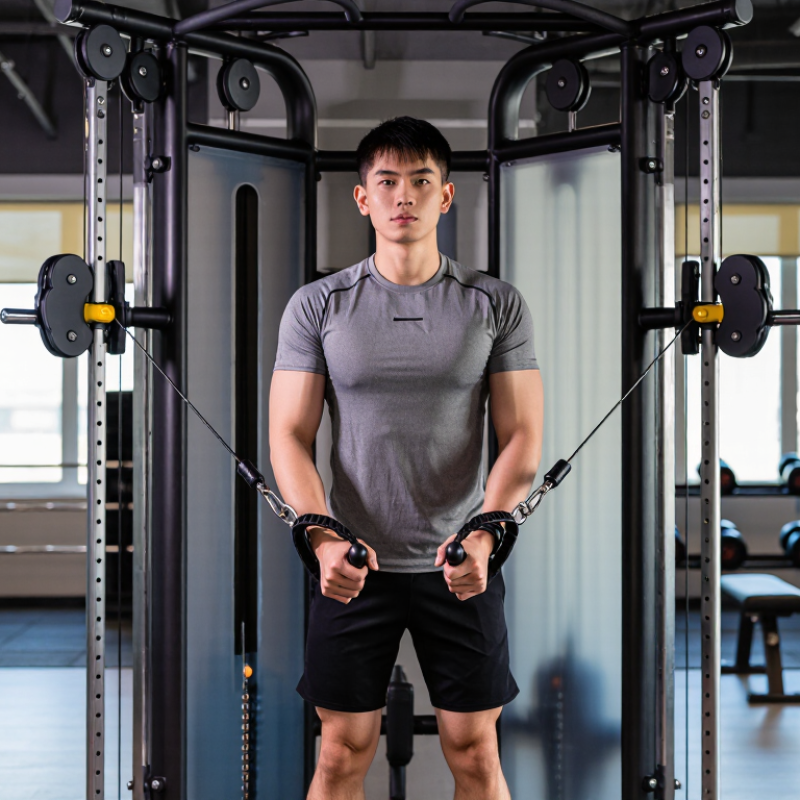
2026 Best Cable Machine Why Cant I Feel My Back Muscles?

What It Means When You Cannot Feel Your Back Muscles

Why can’t you feel your back muscles during cable exercises? The answer is rarely a lack of effort. Many lifters pull with their hands, shrug their shoulders, or use too much weight. Your biceps then dominate the movement, while your lats and mid-back receive less tension. A simple test helps: reduce the load by 20–30%, slow the return, and pause when your elbows reach your sides.

Make the movement smaller and cleaner. Keep your ribs controlled, chest relaxed, and shoulders away from your ears. Think about driving your elbows backward, not pulling the handle toward your body. Before each set, gently depress your shoulders and hold that position for one second. It feels awkward at first. That is normal. I have also found that lightly touching the target muscle between sets improves awareness, although this cue is not a guaranteed growth method.

The American College of Sports Medicine recommends resistance training two to three days weekly, commonly using multiple sets and moderate repetitions. Its 2025 Worldwide Survey also placed traditional strength training among the leading global fitness trends, showing continued interest in structured resistance work. Research published in the Journal of Strength and Conditioning Research suggests that lighter loads and focused attention can increase perceived muscle involvement, but sensation alone does not prove effective training. Track strength, control, and recovery too. If your lower back swings, your grip fails early, or pain appears, reassess the setup with a qualified exercise professional.

2026 Best Cable Machine: Why Can’t I Feel My Back Muscles?

Not feeling your back muscles does not necessarily mean they are inactive. The most common causes are excessive weight, poor scapular control, too much arm involvement, and an uncontrolled eccentric phase.

Use a load that allows approximately 8–12 controlled repetitions, keep 1–3 repetitions in reserve, pause briefly when the shoulder blades move together, and lower the handle for about 2–4 seconds. These practical resistance-training ranges can help reduce momentum and improve awareness of the target muscles.

Common Causes of Poor Back Muscle Activation

2026 Best Cable Machine: Why Can’t I Feel My Back Muscles?
Common Causes of Poor Back Muscle Activation

Many lifters blame the cable machine when their back work feels absent. In practice, setup and movement control usually matter more. A seat that is too low can pull your shoulders forward. A handle that is too wide may shorten the useful range. Adjust the pulley until your elbows travel naturally beside your ribs.

Your arms may be doing most of the work. This happens when you grip tightly and bend your elbows before moving your shoulder blades. Try a lighter load. Begin each repetition by drawing the shoulder blades down and back, then guide your elbows toward your hips. Pause briefly at the contracted position. Keep your chest steady, but do not force an exaggerated arch. You should feel controlled tension, not a sharp pinch.

Breathing and posture also affect activation. Exhale during the pull, and keep your neck relaxed. If your shoulders rise toward your ears, reduce the weight again. Film one set from the side; honest video often reveals swinging, shortened repetitions, or a loose torso. I have found that chasing a strong sensation can mislead beginners. Muscle feeling is useful feedback, not proof of perfect technique. Test one adjustment at a time for several sessions, and record load, range, and comfort. Persistent pain, numbness, or weakness deserves assessment from a qualified health professional.

How Cable Machine Setup Affects Back Engagement

2026 Best Cable Machine: Why Can’t I Feel My Back Muscles?

A cable machine can be excellent for back training, but setup often decides where the tension goes. I learned this after repeatedly feeling my biceps during pulldowns. When the pulley sat too high, my shoulders lifted and my elbows traveled forward. Lowering the seat, bracing my ribs, and pulling toward my upper chest changed the movement immediately. Keep your neck relaxed. Do not chase heavier numbers.

Handle position also matters. A neutral grip usually keeps the elbows closer to the torso, while a wide grip may encourage more upper-back movement. Set the cable so the line of pull matches your target. For a mid-back row, the handle should travel toward the lower ribs. For a lat-focused pull, guide your elbows down and slightly back. Move slowly, especially during the return. The muscle should lengthen under control, not disappear under momentum.

I now test lighter weights before adding plates. That habit improves control, although I still sometimes rush the final repetitions. A strong back contraction is not proof of perfect technique, and a weak sensation does not always mean the muscles are inactive. Research and coaching experience support stable posture, full pain-free range, and progressive loading. If your lower back swings, reduce the load and adjust the pulley height. Film one set from the side. Small setup errors become obvious on video.

Step-by-Step Technique for Better Back Muscle Connection

2026 Best Cable Machine: Why Can’t I Feel My Back Muscles?

A weak back connection often begins before the first repetition. Set the cable at chest height and stand with soft knees. Brace your ribs without holding your breath. Pull your shoulders down, not backward. Keep your wrists straight and your elbows slightly bent. This position reduces arm dominance and gives your lats a clearer role. A mirror can help, but touch feedback is often better.

Choose a load you can control for 10 to 15 repetitions. Let the handle travel forward slowly until your shoulder blades move naturally. Then drive your elbows toward your hips. Pause for one second near your ribs. Do not yank the cable or lean away from the stack. Exhale during the pull. Inhale as your arms lengthen. The movement should feel smooth, not dramatic.

If your biceps burn first, use a lighter weight and loosen your grip. Imagine hooks attached to your elbows. This simple cue often improves focus. You can also perform one slow practice set with your eyes closed, if balance remains safe. Muscle sensation is useful, but it is not the only measure of progress. Stronger repetitions and stable form matter more. Even experienced lifters lose connection when fatigue changes their posture. That is worth noticing, not ignoring. Stop if you feel sharp pain, numbness, or unusual joint pressure, and seek qualified guidance.

Ways to Improve Progress and Track Back Muscle Activation

2026 Best Cable Machine: Why Can’t I Feel My Back Muscles?

Not feeling your back does not always mean the exercise is failing. The lats and mid-back muscles often work without creating a strong “pump.” I made this mistake by adding weight too quickly. My arms took over, while my shoulders shrugged toward my ears.

Start with a lighter cable load. Use a two-second pull, one-second squeeze, and controlled return. Keep your ribs down and elbows moving toward your hips. Pause briefly when the handles reach your body. A mirror or phone recording can reveal shortened range of motion and unwanted torso movement. Track the load, repetitions, tempo, and perceived effort after every session. An effort rating of 7–9 out of 10 near the final repetitions can show meaningful progression, even without strong muscle sensation.

The American College of Sports Medicine’s resistance-training guidance commonly recommends 2–4 sets of 8–12 repetitions for many healthy adults. The World Health Organization also recommends muscle-strengthening activities on at least two days weekly. These figures support consistency, not random heavier sessions. Compare weekly performance under similar conditions. If you complete 10 controlled repetitions this week and 12 next week, progress is visible. Surface EMG can estimate muscle activity, but it does not directly prove muscle growth or superior training quality. Treat it carefully. A 2021 systematic review in Sports Medicine also noted that exercise technique and individual anatomy influence muscle activation. Your best tracking system may remain simple: stable form, repeatable measurements, and honest video review.

FAQS

Why can’t I feel my back muscles during cable exercises?

Your arms may be doing too much work. Use a lighter load and guide your elbows toward your hips. A strong pump is not required for progress.

How should I set up before pulling the cable?

Set the cable around chest height. Stand with soft knees and keep your ribs gently braced. Pull your shoulders down, not backward. Keep your wrists straight.

What repetition range supports better muscle connection?

Choose a weight you can control for 10 to 15 repetitions. Pull smoothly for two seconds. Pause near your ribs. Return slowly.

How can I stop my biceps from taking over?

Loosen your grip slightly and reduce the weight. Imagine hooks attached to your elbows. Keep your elbows slightly bent. This cue may feel awkward at first.

Should I lean away from the cable stack?

No. Keep your torso stable and avoid yanking the handle. Unwanted leaning often shortens the movement. A phone recording can reveal this mistake.

What should I do if I cannot feel a strong back pump?

Do not assume the exercise has failed. Back muscles can work without a dramatic sensation. Track controlled repetitions, load, tempo, and effort instead. Sensation is useful, but imperfect.

How often should I train my back muscles?

Muscle-strengthening work can be performed at least twice weekly. Many healthy adults use 2–4 sets of 8–12 repetitions. Keep the sessions consistent. Random heavy workouts are harder to evaluate.

How can I measure progress when muscle sensation changes?

Compare similar sessions each week. Record your load, repetitions, tempo, and final effort. For example, 12 controlled repetitions can show progress over 10 repetitions. I once added weight too quickly. My arms took over.

Conclusion

Why can't I feel my back muscles when using a cable machine? This common issue usually means your technique, setup, or mind-muscle connection needs adjustment rather than proving that your back is not working. Poor posture, excessive weight, fast repetitions, weak control, and relying too much on the arms can all reduce back muscle activation. Cable height, attachment position, body angle, and range of motion also influence where the tension is felt.

To improve engagement, begin with a manageable resistance and set your body in a stable position. Keep your chest controlled, shoulders relaxed, and spine neutral while initiating each movement with the back instead of the hands. Pause briefly when the shoulder blades move into their strongest position, then return slowly under control. Experiment with different grips and cable angles, record your weights and repetitions, and evaluate progress through improved control, consistent tension, and gradual strength gains rather than simply lifting heavier.

Liam

Liam

Liam is a dedicated marketing professional with a profound expertise in the industry, where he excels at highlighting the unique advantages of our core products. With a keen understanding of market trends and consumer needs, Liam frequently updates our company’s professional blog, providing......