Why should I use a lifting belt for heavy squats? This question deserves more than a simple yes or no. A properly fitted belt can give your trunk a firm surface to brace against. It may help you create greater intra-abdominal pressure during difficult repetitions. That support can make a heavy squat feel more controlled, especially when the bar moves slowly near the sticking point.
Dr. Stuart McGill, a respected spine biomechanics researcher, has emphasized, “A belt is not a substitute for good technique.” His point remains important. A belt does not magically protect your spine. It cannot fix a loose brace, poor depth control, or excessive fatigue. You still need consistent breathing, stable foot pressure, and a neutral torso. Leave your ego outside.
This guide examines China’s top 10 lifting belts for heavy squats. It considers belt thickness, stiffness, buckle design, comfort, sizing accuracy, and training purpose. A powerlifting belt may suit maximal attempts, while a softer nylon belt can feel better during higher-volume sessions. Small details matter. A belt that digs into your ribs can distract you under a loaded bar.
My own conclusion is not completely absolute. Some lifters squat confidently without a belt, and beginners should first develop reliable technique. However, experienced lifters may benefit from the extra bracing feedback and performance support. Use the belt as a tool, not armor. Begin with moderate loads. Learn how your body responds. Then decide whether it genuinely improves your squat.
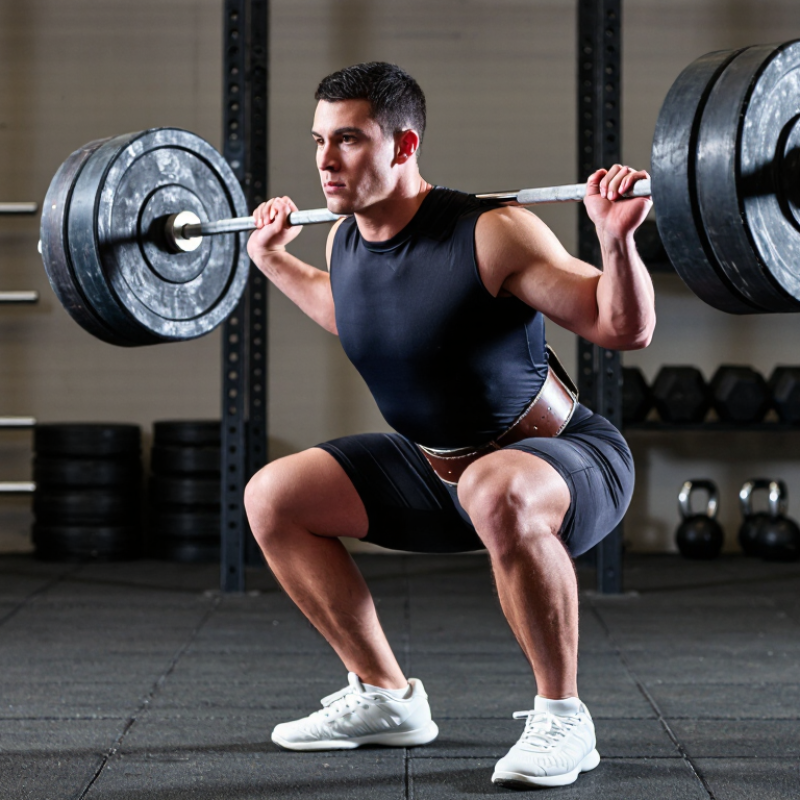
A lifting belt is a firm band around the waist, not a substitute for strong technique. During a heavy squat, you inhale, brace your abdomen, and press outward against the belt. This creates a more stable trunk, similar to tightening a wide support wall around your midsection. Your spine may then resist unwanted bending more effectively.
Laboratory research offers useful, but limited, evidence. Harman and colleagues reported that a belt could increase intra-abdominal pressure by roughly 25–40% during heavy lifting. Lander and colleagues also found improved squat performance in trained lifters wearing a belt. These findings do not prove that every lifter needs one. A belt usually helps most when loads approach maximal training levels. It may feel restrictive at first.
Fit matters. The belt should feel snug, allowing a deep breath without cutting into your ribs or hips. Brace before descending, keep your chest controlled, and avoid leaning into the belt. I have seen lifters wear one for every set, even during warm-ups. That habit can hide weak bracing skills. The evidence is useful, but not perfect. Individual responses differ, and research samples remain relatively small. A belt supports pressure and positioning; it does not repair poor squat mechanics.
| No. | Generic Belt Configuration | Typical Width | Typical Thickness | Common Material | Closure System | Best Use for Squats | Main Support Characteristics |
|---|---|---|---|---|---|---|---|
| 1 | 10 mm Single-Prong Leather Belt | 10 cm uniform width | 10 mm | Full-grain or layered leather | Single roller buckle | Heavy squats and general strength training | Firm, consistent resistance around the trunk with a relatively simple adjustment system. |
| 2 | 13 mm Single-Prong Leather Belt | 10 cm uniform width | 13 mm | Thick leather | Single roller buckle | Very heavy, low-repetition squats | High rigidity and strong bracing feedback; may feel restrictive for beginners or smaller torsos. |
| 3 | 10 mm Double-Prong Leather Belt | 10 cm uniform width | 10 mm | Layered leather | Double-prong buckle | Heavy training when a secure buckle connection is preferred | Distributes fastening load across two prongs, although tightening can take longer. |
| 4 | 10 mm Lever Buckle Belt | 10 cm uniform width | 10 mm | Leather or synthetic laminate | Lever mechanism | Repeated heavy sets with fast setup | Provides repeatable tightness, but the lever position and mounting screws must be checked regularly. |
| 5 | 10 mm Two-Prong Powerlifting Belt | 10 cm uniform width | 10 mm | Stiff leather | Two-prong buckle | Competition-style back squats | Uniform trunk contact supports deliberate abdominal bracing without a tapered front or back. |
| 6 | 10 mm Tapered Leather Belt | Approximately 10 cm rear / 5–7.5 cm front | 8–10 mm | Leather | Single-prong or lever | Squats combined with deadlifts or Olympic-lifting movements | More hip and torso clearance than a uniform-width belt, with somewhat less front abdominal coverage. |
| 7 | 10 cm Nylon Velcro Belt | About 10 cm at the back | Approximately 6–10 mm padded profile | Nylon with foam or fabric padding | Hook-and-loop closure | Moderate loads, training variety, and comfort-focused sessions | Lightweight and easy to adjust, but generally less rigid than thick leather or competition belts. |
| 8 | 13 cm Nylon Support Belt | About 13 cm at the back | Approximately 6–10 mm padded profile | Nylon with a wide lumbar panel | Hook-and-loop closure | General strength work and higher-repetition squats | Broad back coverage and flexible movement; compression and rigidity depend on the internal reinforcement. |
| 9 | 10 mm Synthetic Power Belt | 10 cm uniform width | 10 mm | Synthetic leather or reinforced polymer | Lever or single-prong | Frequent heavy squats in humid or high-use environments | Consistent shape and easier cleaning than many natural-leather designs; long-term stiffness varies by construction. |
| 10 | 13 mm Competition-Style Lever Belt | 10 cm uniform width | 13 mm | Very stiff leather or reinforced laminate | Lever mechanism | Near-maximal singles and formal strength-sport preparation | Maximum rigidity and repeatable tension, but it requires accurate sizing and may limit comfort or mobility. |
A belt gives the abdominal and trunk muscles a firm surface against which to brace. When the lifter inhales and creates circumferential pressure, the belt can improve bracing feedback and help maintain a more stable torso during heavy attempts.
A belt does not replace proper squat technique, progressive training, or medical advice. It should be tight enough to brace against while still allowing controlled breathing and a safe, comfortable range of motion.
Look for dense leather or reinforced synthetic material. Check the stitching for even, tight seams. Uneven seams may weaken over time.
A thicker belt can provide stronger abdominal support during heavy squats. However, it may restrict deep squat positions. More support is not always better.
A consistent width often feels stable around the torso. A tapered shape may suit lifters with shorter torsos. Your squat depth still matters.
Measure your relaxed waist where the belt will sit. Then compare that measurement with the sizing chart. Do not choose by body weight alone.
It should feel firm without causing numbness or forced breathing. You should take a full breath and brace comfortably. Too tight can change your squat mechanics.
Test it during several warm-up sets before adding heavy weight. Check breathing, hip movement, unracking, and squat depth. My first impression can be wrong.
Beginners may use a flexible belt while learning breathing and bracing. The belt should support technique, not replace it. Practice some light sets without it.
Avoid wearing the belt too high or leaning against it. Do not copy another lifter’s tightness. Stop if sharp pain, numbness, or unusual pressure appears.
Inspect the buckle and stitching after demanding sessions. Watch for damaged holes, loose threads, or bent hardware. Small defects deserve attention.
A lifting belt can be a useful training tool for athletes performing heavy squats. It supports the torso by giving the abdominal muscles a firm surface to brace against, which may help improve trunk stability, posture, and confidence under load. Why should I use a lifting belt for heavy squats? The main reason is to enhance bracing during demanding sets, not to replace proper technique or core strength. When comparing China’s top 10 lifting belts, consider material quality, width, thickness, fastening system, stiffness, comfort, durability, and available sizing.
The right belt should match your training goals, body shape, experience, and preferred level of support. Wear it around the midsection, position it consistently, and tighten it firmly without restricting breathing or movement. Before lifting, practice bracing, maintain a neutral spine, and increase loads gradually. Common mistakes include wearing the belt too loosely or tightly, relying on it for every exercise, neglecting warm-ups, and using poor squat form. A belt should complement safe programming, controlled technique, and responsible coaching.

 PNZ Fitness