A new rubber mat can turn a home gym into a room with a sharp, tire-like smell. The odor usually comes from volatile compounds, packaging residues, adhesives, or recycled rubber content. It does not automatically prove that the mat is unsafe. Still, strong smells deserve attention, especially in a small room with closed windows.
Why does my home gym smell like rubber and how to fix it? This guide examines China’s top 10 rubber mat suppliers through material transparency, odor-control practices, testing evidence, and customer experience. The U.S. Environmental Protection Agency reports that indoor pollutant concentrations can be two to five times higher than outdoor levels, and sometimes much higher. That makes ventilation a practical first response. Unroll the mats outdoors, wipe their surfaces, and allow several days of airflow before installation. Avoid covering the odor with artificial fragrance.
Supplier claims need careful checking. UL Solutions’ GREENGUARD standards focus on chemical emissions from indoor products, while the California Department of Public Health’s Standard Method evaluates emissions in controlled chambers. These references cannot prove every mat is odor-free. They can, however, help buyers ask better questions about VOC testing, rubber composition, batch quality, and factory controls. A supplier’s certificate should match the exact product, thickness, color, and production batch. This detail is often missed. In my view, rankings also have limits. Price and export volume matter, but a quiet mat, clear documentation, and responsive after-sales support may matter more for a real home gym.
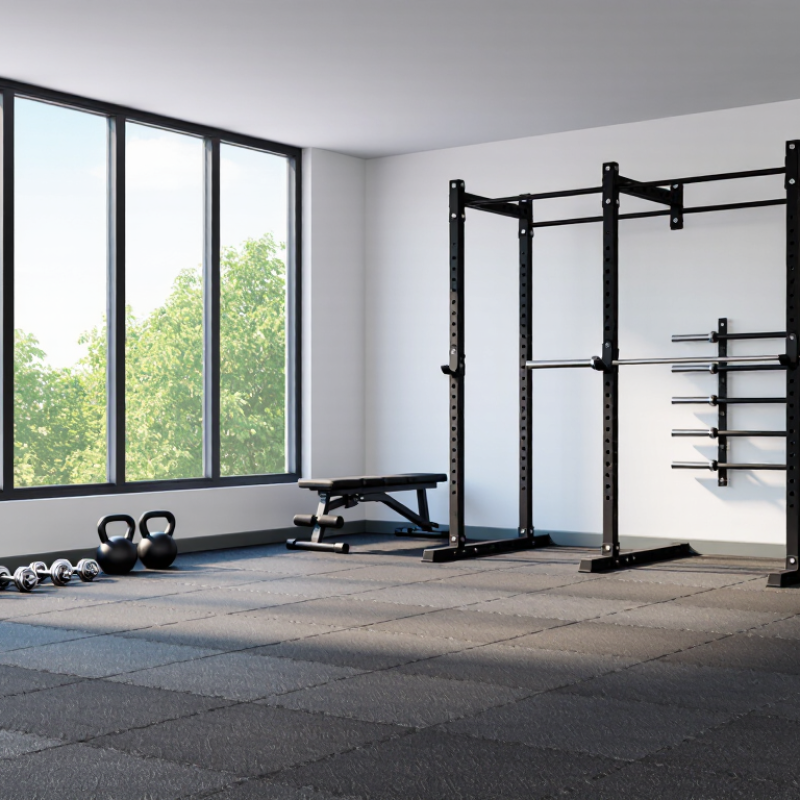
Home gym rubber mats can smell strong for several different reasons. The most common cause is off-gassing from synthetic rubber, processing oils, and curing chemicals. These compounds slowly escape after production, especially in warm rooms with limited airflow. Sunlight and underfloor heating can make the odor more noticeable.
Moisture creates another problem. Sweat can collect beneath the mat, where air rarely reaches. Damp dust may support microbial growth and produce a sour smell. Adhesive-backed mats can also release odors from their bonding layers. I once blamed the rubber itself, but that assumption was too simple. The backing, floor surface, and cleaning products may all contribute.
Smell does not automatically prove harmful exposure. However, a sharp chemical odor that causes headaches or throat irritation deserves attention. Reliable suppliers should provide material information and, when available, independent emissions testing. Buyers can also inspect the production date, ventilation guidance, and recommended cleaning method. Place new mats in an open, shaded area before installation. Wash the surface with mild soap, dry both sides, and lift the mats regularly. Avoid sealing damp mats inside a closed gym. That mistake is easy to make.
How China’s Top Rubber Mat Suppliers Address Smell Control
Strong rubber mat odor usually comes from volatile compounds in binders, adhesives, and unfinished surfaces. China’s leading suppliers now control odor through cleaner formulations and longer post-curing periods. This matters in home gyms, where mats remain close to the face during floor exercises.
The World Health Organization recommends keeping indoor formaldehyde below 0.1 mg/m³ over 30 minutes. Odor may appear below that level, but it still affects user confidence. Suppliers therefore test volatile organic compounds using ISO 16000-6 methods. They also inspect odor after heating, washing, and sealed packaging. Some factories leave mats in ventilated rooms for several days before shipment. That practical step often reduces the sharp “new rubber” smell.
Material selection matters too. Recycled rubber granules can vary between batches. Reliable factories screen incoming materials, record production temperatures, and retain samples for later checks. They may use water-based surface treatments instead of heavy solvent coatings. Results can differ. A mat that smells mild in a factory may smell stronger inside a warm apartment. Packaging can trap odors during transport, which is an overlooked problem. Better suppliers therefore print batch codes and provide airing instructions. Independent laboratory testing improves trust, although no test fully represents every home gym.
A practical odor-control check uses a 0–5 sensory intensity scale, where 0 means no detectable odor and 5 means very strong odor. Rubber mat suppliers commonly reduce odor through low-emission raw materials, controlled vulcanization, post-curing, ventilation, surface cleaning, and batch-level odor testing. The chart shows the evaluation scale rather than company-specific performance data.
Reference framework: ISO 16000-28 odor intensity assessment principles.
Comparing China’s top ten rubber mat suppliers requires more than checking price and thickness. Grand View Research estimates the global rubber flooring market will grow steadily through 2030, increasing competition and product variation. Request factory test reports, material declarations, and production dates before choosing a supplier. A professional factory should explain its rubber blend, curing process, and ventilation controls.
Smell matters at home. The U.S. Environmental Protection Agency notes that indoor VOC levels can exceed outdoor levels, especially in poorly ventilated spaces. Ask suppliers for VOC testing based on ISO 16000-6 or an equivalent recognized method. Do not accept “low odor” as technical proof. Request samples from different production batches. Leave each sample in a closed room for 48 hours, then inspect it after opening the package. Simple, but useful.
Compare density, surface wear, slip resistance, dimensional stability, and edge accuracy. ASTM flooring methods can help structure these checks. Ask for abrasion results, not only marketing photos. A 15-millimeter mat may feel softer, while a denser 10-millimeter mat can resist equipment marks better. I would also compare packaging, replacement policies, and shipment consistency. Some suppliers offer impressive first samples, yet later batches smell stronger or vary in color. That weakness is easy to miss. Verify claims through an independent laboratory when the gym will have limited airflow.
Choosing a low-odor rubber mat starts with the room, not the product label.
In a small bedroom gym, strong rubber fumes can linger for days. Choose mats with verified low-VOC test results and clear material information. Recycled rubber may be durable, but its smell can vary between production batches. Ask suppliers about curing time, factory ventilation, and independent odor testing. Vague answers deserve caution.
Different workout areas need different surfaces. A lifting zone benefits from dense, thick mats that absorb dropped weights and reduce floor vibration. For treadmills or bikes, thinner mats with firm textures usually sit more securely.
Stretching corners need smoother surfaces without sharp granules. In a garage, choose moisture-resistant tiles and leave small expansion gaps. Sweat and trapped water can create another unpleasant smell.
Unpack the mats outdoors when possible. Let them air out for several days before installation. Wipe them with mild soap, then dry them completely. Never cover a damp floor.
I have seen buyers focus on thickness and overlook ventilation. That mistake is easy to repeat. Also, odor-free is rarely absolute; even a carefully tested mat may smell slightly after opening. A reliable supplier should provide batch details, cleaning guidance, and realistic odor expectations. Test one tile in the intended room before ordering a full set.
Rubber mats can protect floors and reduce workout noise, but poor installation may trap a strong smell. Move each mat into a shaded, well-ventilated area for 48 to 72 hours before installation. This allows packaging odors to escape gradually. Do not place mats directly over damp concrete. Moisture can create a stale odor and encourage surface problems.
Clean the floor with mild soap and water, then let it dry completely. Lay the mats flat and leave small expansion gaps near walls. Tight seams look neat, but they can buckle when temperatures change. A practical check is simple: lift one corner after installation. If the underside feels damp, pause and improve ventilation. My experience suggests that rushing this step causes more trouble than the rubber itself.
Tips: Wipe new mats with diluted mild detergent, rinse lightly, and dry them upright. Keep doors or windows open during the first week. Avoid strong solvents, bleach, and heavy fragrances, because they may damage the rubber or hide the real odor. Vacuum dust regularly, especially around seams. Clean sweat soon after training with a soft cloth. Inspect edges monthly for curling or trapped moisture. If the smell remains sharp after several weeks, move the mats outside temporarily and check the room’s airflow. This is not always convenient, but indoor air quality deserves attention.
Volatile compounds may come from binders, adhesives, recycled rubber, or unfinished surfaces. Warm rooms can make the odor stronger. It is unpleasant, but not always a sign of serious danger.
Ask for low-VOC test results, material details, curing time, and batch information. Independent testing provides more confidence. Still, no label predicts every home perfectly.
Recycled rubber batches may vary in composition and odor. Production temperature and curing time also affect results. A factory sample may smell mild, while a warm bedroom reveals more odor.
Dense, thick mats help absorb dropped weights and reduce floor vibration. Check whether the surface resists movement during repeated lifting. Heavy is not automatically better.
Choose a thinner mat with a firm, stable texture. It should sit flat without sliding across the floor. Measure the equipment feet before ordering.
Unpack them outdoors when possible. Let them air for several days. Wipe them with mild soap, then dry them completely.
Yes. Sealed packaging can trap odors during transport. Open the package promptly and follow the airing instructions. Do not cover a damp floor.
Moisture-resistant tiles work better in damp spaces. Leave small expansion gaps around the edges. Trapped sweat and water can create another unpleasant smell.
Usually not. Even tested mats may smell slightly after opening. I would test one tile in the intended room before buying a full set.
Look for batch codes, cleaning guidance, test records, and realistic odor expectations. Vague answers deserve caution. I would not rely on thickness alone.
Rubber odor in a home gym usually comes from volatile compounds released by new mats, especially those made from recycled rubber, and can become stronger in warm, poorly ventilated rooms. This overview explains: “Why does my home gym smell like rubber and how to fix it?” It examines how leading Chinese rubber mat suppliers reduce odor through cleaner raw materials, improved curing processes, surface treatments, and quality testing. It also presents practical criteria for comparing the top 10 suppliers, including material transparency, odor ratings, durability, thickness, safety documentation, customization, and after-sales support.
The guide further matches low-odor mat types to different areas, such as quiet foam-backed surfaces for living spaces, dense rubber tiles for strength zones, and moisture-resistant options for multipurpose rooms. Finally, it explains how unpacking, airing, washing, and allowing mats to dry fully can reduce initial smell. Proper ventilation, regular cleaning, controlled humidity, and prompt removal of trapped moisture help maintain a fresher home gym over time.

PNZ Fitness