Pregnancy can change how familiar exercise feels. A treadmill offers a steady surface, adjustable speed, and a clear way to slow down. Still, a routine that felt easy last month may feel different today. Is it safe to exercise on a treadmill during a pregnancy? For many people with uncomplicated pregnancies, moderate physical activity may be appropriate, but individual guidance matters. A healthcare professional can consider your health, pregnancy, and usual activity level before you begin or continue.
The practical details are easy to overlook. Start at a comfortable pace, keep the incline modest, and use the handrails when balance feels uncertain. Wear supportive shoes, keep water nearby, and avoid pushing through dizziness, unusual shortness of breath, pain, or bleeding. Stop and seek medical advice if concerning symptoms occur. Small changes matter. Some days, a short walk is enough; on others, rest may be the wiser choice. Pregnancy is not a time to chase a personal record, and treadmill settings cannot tell you how your body is coping. This guide explores potential benefits, precautions, warning signs, and questions to discuss with your clinician. It cannot replace personalized medical advice, and recommendations may differ for people with pregnancy complications or other health concerns. That distinction deserves attention, even when general exercise guidance sounds reassuring.
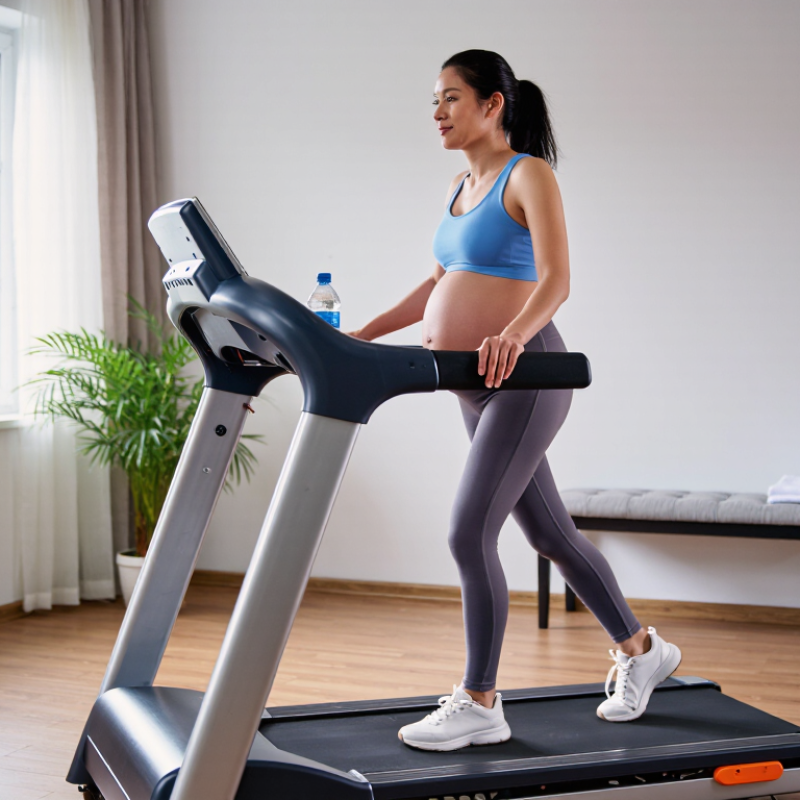
For many people with uncomplicated pregnancies, regular moderate exercise is considered safe and beneficial.
Spread it across several days rather than treating it as one demanding session. Small steps count. A brisk walk is one practical option.
On a treadmill, choose a pace that lets you speak in full sentences, but not sing comfortably. Keep the belt slow while getting on or off, wear supportive shoes, and hold the rails if balance feels uncertain. Drink water, and stop if you feel overheated. The 150-minute target is guidance, not a test you have to pass. It is easy to focus too much on the number.
Pregnancy changes balance and energy, so adjust speed and duration as your body changes. Ask your maternity clinician what is suitable, especially if you have a medical condition, pregnancy complication, or have not exercised recently. Stop and seek medical advice for warning signs such as vaginal bleeding, fluid leakage, chest pain, dizziness, or painful contractions. A cautious plan may look less impressive, but it can be the wiser one.
Before stepping onto a treadmill, review your health and pregnancy history with your obstetric clinician. Exercise is not appropriate for every pregnancy. ACOG identifies conditions that can make exercise unsafe, including certain heart or lung disorders, preeclampsia, ruptured membranes, and persistent bleeding. Other concerns may require individual assessment. The list is not a self-diagnosis tool; your clinician can explain which guidance applies to you.
If exercise is approved, ask about pace, incline, and duration. A flat, steady walk may be more suitable than a fast workout. Keep water nearby, wear supportive shoes, and use the handrail when balance feels uncertain. Stop and contact your care team if you develop vaginal bleeding, fluid leakage, chest pain, dizziness, contractions, or unusual shortness of breath. Small changes matter.
Tips: Bring your medication and pregnancy details to the appointment. Ask which symptoms require urgent care. If you have not exercised recently, say so plainly. It can feel awkward, but it helps your clinician suggest a safer starting point. Don’t assume yesterday’s plan still fits today.
China Top Treadmills: Is Exercise Safe During Pregnancy?
Set a Moderate Pace: ACOG’s Talk Test Means You Can Hold a Conversation
For many uncomplicated pregnancies, walking on a treadmill can be a practical way to stay active. ACOG’s Committee Opinion No. 804 recommends at least 150 minutes of moderate-intensity aerobic activity each week for most pregnant people without medical or obstetric complications. Your own clinician can advise whether that guidance fits your health and pregnancy.
Use the talk test rather than chasing speed or calorie numbers. At a moderate pace, you should be able to speak a full sentence without gasping. If you can only manage a few words, slow down. The test is useful, not perfect; heat, fatigue, and pregnancy symptoms can change how exercise feels. A treadmill’s steady belt may seem predictable, but balance and comfort can shift as pregnancy progresses. WHO’s 2020 physical activity guidelines also support regular moderate activity during pregnancy when there are no contraindications.
Tips: Start slowly, keep water nearby, and choose a pace that feels controlled. Hold the rails only when needed for balance; avoid leaning heavily on them. Stop and contact your clinician for symptoms such as dizziness, chest pain, bleeding, or painful contractions. And be honest about how you feel that day. A planned workout is not always the right workout.
General guidance for treadmill walking during an uncomplicated pregnancy. Individual needs vary; discuss exercise with your obstetric care provider.
| Dimension | Evidence-based guidance | Practical treadmill application |
|---|---|---|
| Who can usually exercise? | For most people with an uncomplicated pregnancy, physical activity is considered safe and beneficial. Some medical or pregnancy complications may require changes or restrictions. | Ask your obstetric care provider whether walking or treadmill exercise is appropriate for your circumstances, especially if you have complications or have been advised to limit activity. |
| Weekly activity target | ACOG recommends at least 150 minutes of moderate-intensity aerobic activity per week for pregnant people without contraindications. | Build up gradually. For example, spread activity across several days rather than trying to complete the weekly target in one session. |
| How to judge intensity | At moderate intensity, you should be able to talk but not sing comfortably. This is the talk test. | Choose a walking speed and incline that let you hold a conversation. Slow down if speaking becomes difficult, or if you feel unwell. |
| Starting or returning to exercise | People who were inactive before pregnancy should begin gradually and increase activity as tolerated, with guidance from their care provider. | Start with a comfortable, easy walk and short sessions. Increase duration or pace progressively rather than making sudden changes. |
| Balance and fall prevention | Pregnancy can change balance and posture. Activities with a high risk of falling or abdominal injury should be avoided. | Use a comfortable pace, step onto and off the treadmill carefully, and stop if you feel unsteady. Do not use a moving belt if balance feels impaired. |
| Heat and hydration | Avoid overheating and drink fluids before, during, and after exercise. Extra caution is appropriate in hot or humid conditions. | Exercise in a well-ventilated space, wear comfortable clothing, and keep water nearby. Reduce or stop exercise if you feel excessively hot or weak. |
| When to stop and seek medical advice | Stop exercising and contact your care provider for warning signs such as vaginal bleeding, fluid leakage, regular painful contractions, chest pain, dizziness, severe headache, or calf pain or swelling. | Do not try to push through concerning symptoms. Seek urgent care for severe symptoms or an emergency. |
| Individualized precautions | Some conditions can make exercise inadvisable or require a tailored plan. General advice cannot determine personal medical eligibility. | Follow your clinician’s specific instructions about activity, intensity, and any symptoms that should prompt a call. |
Note: This table is general educational information, not a substitute for medical advice. Guidance is based on recommendations from the American College of Obstetricians and Gynecologists (ACOG); consult your obstetric care provider for advice tailored to your pregnancy.
As pregnancy progresses, a treadmill workout may need to change with your balance. Your center of gravity shifts as your abdomen grows, and turns or quick speed changes can feel less steady. If your clinician says exercise is appropriate, begin at a comfortable pace and use the handrail when getting on or off. Keep the belt slow enough to step away safely. Small changes matter. A flat setting may feel better than an incline, especially if you feel pulled forward. Wear supportive shoes, keep water nearby, and choose a cool, uncluttered space.
Notice how each session feels, not just the distance on the display. You might shorten your walk or lower the speed on a day when your balance feels different. That is sensible, not a failure. No pace is worth a fall. Avoid walking if you feel dizzy or unsteady, and stop for bleeding, fluid leakage, chest pain, painful contractions, or unusual shortness of breath. Contact your maternity care provider if symptoms occur or you are unsure whether treadmill exercise is suitable. The right adjustment can be difficult to judge alone, so mention balance changes at your next appointment.
For most people with uncomplicated pregnancies, guidelines recommend at least 150 minutes of moderate-intensity aerobic activity per week. This target can apply throughout pregnancy, but it does not prescribe treadmill speed or incline. As balance and comfort change, slow down, use the handrails when needed, and adjust or stop exercise if you feel unsteady. Ask your healthcare professional for guidance specific to your pregnancy.
China Top Treadmills: Is Exercise Safe During Pregnancy?
For many uncomplicated pregnancies, moderate exercise can be appropriate, but personal medical advice matters. A treadmill’s steady belt may feel predictable; changing balance and fatigue can still make a familiar walk feel different. Keep the pace comfortable, drink water, and ask your prenatal clinician what suits your health and pregnancy.
ACOG advises stopping exercise and contacting your healthcare professional if warning signs occur. These include vaginal bleeding, dizziness, headache, chest pain, or muscle weakness that affects balance. Stop for calf pain or swelling, regular painful contractions, fluid leaking, or shortness of breath before you begin exercising. Notice reduced fetal movement, too. Don’t push through.
Stop right away. Sit or lie somewhere safe, and tell your clinician what happened and when. Severe or persistent symptoms deserve prompt medical attention. It can be tempting to blame a warm room or a faster setting, but guessing is not a safety plan. Even a short, easy walk should end when something feels wrong.
A common guideline is at least 150 minutes of moderate aerobic activity each week. Spread it across several days. Small walks count.
Use the talk test. You should be able to speak a full sentence without gasping, but singing comfortably may be difficult. Slow down if you can only say a few words.
It may suit many people with uncomplicated pregnancies, but not everyone. Ask your maternity clinician, especially if you have a medical condition, pregnancy complication, or little recent exercise experience.
Start at a slow pace, wear supportive shoes, and keep water nearby. Use the rails if your balance feels uncertain. Step on and off only when the belt is stopped.
No. The weekly target is guidance, not a test. Adjust your pace or duration as your energy and balance change. It is easy to fixate on the number.
Stop for vaginal bleeding, fluid leakage, chest pain, dizziness, headache, or painful contractions. Also stop for calf pain or swelling, unusual weakness, or shortness of breath before exercising. Don’t push through.
Stop right away and sit or lie somewhere safe. Contact your clinician and describe what happened and when. Seek prompt medical attention for severe or persistent symptoms.
Yes. Stop exercising and contact your maternity clinician if you notice reduced fetal movement. A short walk can wait.
Is it safe to exercise on a treadmill during a pregnancy? For many people with uncomplicated pregnancies, moderate activity can be part of a healthy routine, and ACOG recommends aiming for 150 minutes of moderate-intensity exercise each week. Before using a treadmill, discuss your health and pregnancy with a clinician, especially if you have any conditions or complications that may make exercise unsafe. Your clinician can help you review relevant precautions and choose an appropriate plan.
Keep the pace moderate: you should be able to hold a conversation while walking. As your pregnancy progresses, changes in balance and comfort may call for a slower speed, shorter sessions, or added support. Stop exercising and seek medical advice if you experience warning signs such as dizziness, chest pain, shortness of breath before exertion, vaginal bleeding, fluid leakage, or painful contractions. When in doubt, pause your workout and contact your clinician.

PNZ Fitness