Choosing the right weight for your home dumbbells is crucial. The wrong weight can hinder your progress and lead to injury. Many people wonder, "How to choose the right weight for home dumbbells?" It’s a common dilemma.
You'll find that selecting the right weight requires self-awareness and understanding your fitness goals. A weight that feels comfortable today may feel inadequate tomorrow. Start by assessing your current strength level. If you can easily perform more than 15 repetitions, it may be time to increase the weight.
Consider using adjustable dumbbells. They provide flexibility while saving space. However, don’t overlook the importance of quality. Cheaper options may lead to disappointment. Perhaps, you’ll discover that it’s not just about lifting weights but also about lifting your overall confidence. Each workout should challenge you, yet it shouldn't feel impossible. Reflect on your journey and remember, the right weights will evolve as you do.
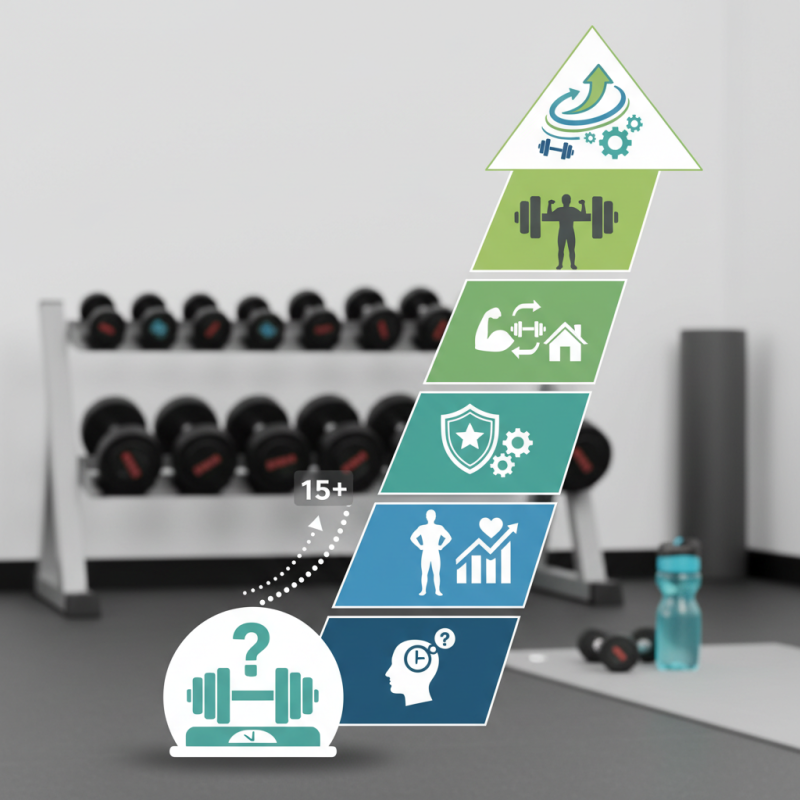
Choosing the Right Weight Based on Your Fitness Goals and Experience Level
When choosing the right weight for your dumbbells, consider your fitness goals and experience level. If you're a beginner, starting light is crucial. Choose weights that allow you to perform exercises with proper form. For example, 5 to 10 pounds may be ideal for upper body workouts. You want to avoid straining your muscles too soon.
For intermediate lifters, increasing weight becomes essential. You might aim for 10 to 20 pounds. This range can challenge your muscles without compromising your technique. Reflect on your progress regularly. Are you able to complete your reps easily? If so, it might be time to add more weight.
Advanced lifters should look at their specific goals. If building strength is your focus, heavier weights are necessary. Think about 20 pounds or more for compound movements. Always remember to listen to your body. If you feel fatigued too quickly, reevaluate your choices. Achieving your fitness goals takes time. It's okay to adjust along the way.
Choosing the Right Weight for Your Home Dumbbells
Understanding the Recommended Weight Range for Various Exercise Types
Choosing the right weight for home dumbbells can be challenging. It's important to consider the types of exercises you plan to do. For strength training, a good rule of thumb is to select a weight that allows for 8-12 reps per set. This range helps build muscle effectively. However, too heavy a weight can lead to improper form and increase injury risk.
For endurance exercises, lighter weights are often recommended. These can range from 1 to 5 pounds. They help in performing higher repetitions comfortably. Think about exercises like lateral raises or bicep curls. You want to feel the burn, but not exhaust your muscles so much that you cannot complete your sets.
It’s also wise to reevaluate your weights regularly. Progress might mean you need to adjust what you use. If you notice workouts becoming easy, take a moment to reflect. Are you truly challenging yourself? Weights should support your growth, not hinder it. Listen to your body and adapt as needed.
Evaluating Your Current Strength: A Guide to Self-Assessment
When choosing dumbbells, self-assessment is crucial. Understanding your current strength helps determine the right weight. A study from the American Council on Exercise states that most beginners can start with 5 to 10-pound dumbbells. However, advanced users may need 20 pounds or more for effective strength training.
To evaluate your strength, try simple exercises. Perform 10 reps of a bicep curl with a weight you find manageable. If you finish without struggle, it may be too light. Conversely, if form breaks after 5 reps, it's likely too heavy. Remember, lifting should maintain proper technique without pain.
Tip: Gradually increase weight. A good rule is to aim for a 5% increase once you can perform 12-15 reps comfortably. Stay mindful of your body. Each session should challenge you but not lead to injury.
Regularly reassess your strength. You may surprise yourself with improvements. This process isn't linear. Reflect on your journey and adjust your weight as needed.
The Impact of Weight Selection on Muscle Growth and Injury Prevention
When selecting the right weight for home dumbbells, it's vital to consider how it affects muscle growth and injury prevention. Choosing weights that are too heavy can lead to strain and long-term injuries. Beginners often underestimate how weight impacts form. Proper form is crucial for effective workouts. Too much weight can compromise that form, leading to accidents.
On the other hand, weights that are too light may not promote muscle growth efficiently. Your muscles need to face challenges to grow stronger. If you find yourself easily completing sets, it may be time to reassess your selection. However, it's essential to increase weights gradually. This helps prevent shocks to the body. Listen to your body. Soreness is normal, but pain is a warning sign.
Take time to reflect on your choices. Reevaluate your weights as you progress. Some days, you might feel strong enough to lift more. Other days, lighter weights may be necessary. Finding that balance is a journey. Adjusting weights can significantly influence your overall fitness journey.
How to Choose the Right Weight for Your Home Dumbbells?
| Weight Range (lbs) |
Recommended User Experience Level |
Target Muscle Groups |
Common Exercises |
Injury Prevention Tips |
| 5 - 10 |
Beginner |
Biceps, Triceps, Shoulders |
Bicep Curls, Tricep Extensions, Shoulder Press |
Focus on form, start slow |
| 10 - 20 |
Intermediate |
Chest, Back, Legs |
Bench Press, Rows, Squats |
Warm up properly, avoid overloading |
| 20 - 35 |
Advanced |
Full Body |
Deadlifts, Snatches, Thrusters |
Ensure spotters, use proper aids |
| 35+ |
Expert |
Targeted Muscle Building |
Weighted Lunges, Heavy Presses |
Use straps, focus on core stability |
Tips for Adjusting Dumbbell Weight as You Progress in Your Training
As you progress in your training, adjusting your dumbbell weight becomes essential. Start by assessing your strength level. Choose a weight that challenges you without risking injury. For beginners, lighter weights can aid in mastering form. This way, you build a solid foundation.
Once you're comfortable, focus on gradual increases. Aim for small increments. Adding just a couple of pounds can make a significant difference. It might feel frustrating at times when strength gains seem slow. However, patience is key. Listen to your body and don’t rush the process.
Track your workouts regularly. Note the weights, reps, and sets. This record helps you identify when to increase weight. Not every session will feel strong. Some days, you might struggle to lift your usual weight. That’s perfectly normal. Reflect on these moments. They teach you to respect your limits and adjust accordingly.
FAQS
: Beginners should start light, around 5 to 10 pounds, to maintain proper form.
If reps feel easy, consider increasing your weight. Reflect on your progress regularly.
Appropriate weights challenge muscles, promoting growth. Too light won't be effective; too heavy risks injury.
Aim for a weight that allows 8-12 reps per set. This is effective for building muscle.
Regularly reassess your weights, especially if workouts become easy. Adjust as needed for growth.
Yes, choosing weights that are too heavy can lead to strain and longer-term injuries.
Use lighter weights, typically 1 to 5 pounds, allowing for higher repetitions comfortably.
Proper form is crucial. Poor form from too much weight can lead to accidents and injuries.
No, increase weights gradually. Listen to your body; soreness is normal, but pain is a warning.
Absolutely. Some days you may lift more, while other days lighter weights may be necessary.
Conclusion
When considering "How to choose the right weight for home dumbbells?", it's essential to align your selection with your fitness goals and experience level. Beginners may start with lighter weights to master form, while experienced individuals can aim for heavier loads that challenge their strength. Understanding the recommended weight range for specific exercises can optimize your workout efficiency and results.
Self-assessment plays a crucial role in determining your current strength, allowing you to evaluate your capabilities and choose weights that are both effective and safe. Proper weight selection not only enhances muscle growth but also minimizes the risk of injury. As you progress in your training, be prepared to adjust your dumbbell weights accordingly, ensuring that your workouts continue to be challenging and aligned with your evolving fitness journey.

 PNZ Fitness