Can I put a heavy squat rack on a balcony? The honest answer is not automatically. A balcony may look solid, yet its supporting structure could have strict limits. A rack, barbell, plates, rubber flooring, and one lifter can create a concentrated load in a small area. That load behaves differently from ordinary furniture.
Structural engineer Dr. John A. Ochsendorf offers a useful principle: “Every structure must be understood through its loads, materials, and connections.” His warning applies here. Do not judge safety by appearance alone. Check the balcony’s design documents, allowable live load, surface condition, railing location, and support system. Ask a qualified structural engineer for a site-specific opinion. A building manager may also have equipment restrictions.
Small details matter. A steel rack can press through thin flooring. Dropped weights can produce sharp impact forces. Vibrations may travel into the room below. Wind can affect an outdoor setup, especially when plates are stored high or near an open edge. The balcony may also drain poorly beneath rubber mats.
This guide examines ten practical facts before installation. It considers static weight, dynamic loading, floor protection, rack placement, anchoring, weather, noise, access, and emergency removal. Some advice online sounds confident but skips the building’s actual structure. That is risky.
I would not rely on guesswork here. Measure everything. Confirm the numbers. If documentation is missing, pause. A lighter adjustable setup on an indoor floor may be the wiser choice, even if it feels less impressive. Safety sometimes looks inconvenient. That is the point.
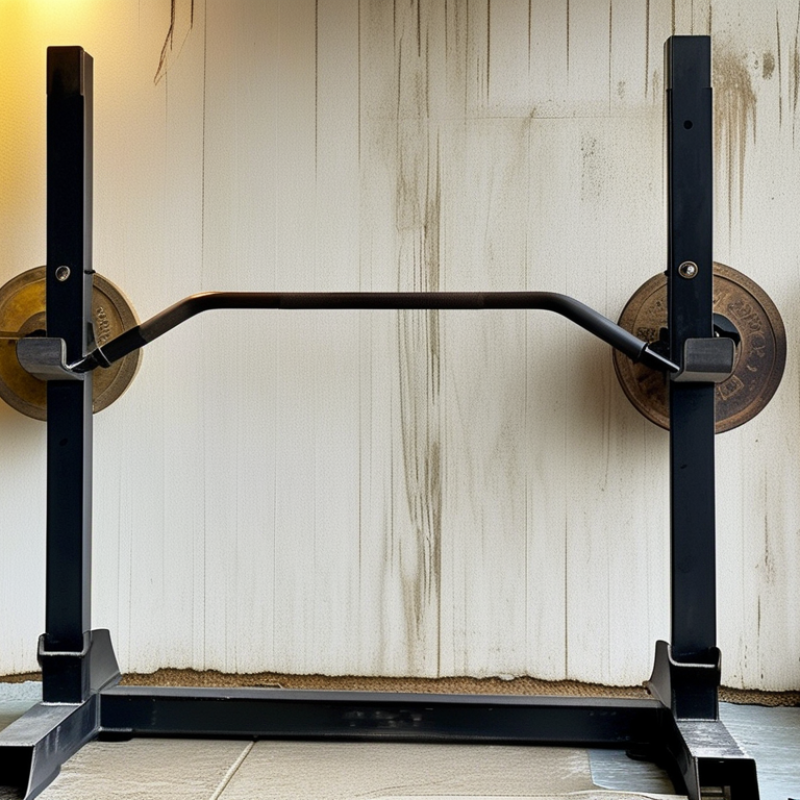
Top 10 Facts: Can I Put a Heavy Squat Rack on a Balcony?
Structural Load Limits for Balcony Squat Racks
A balcony may look solid, but its load capacity is not obvious. The floor supports permanent weight and temporary movement. A squat rack, barbell, plates, and user can create a concentrated load. Dropping a bar adds impact force. That force can exceed the rack’s static weight.
Check the building’s structural drawings first. Look for the balcony’s design load, slab thickness, reinforcement, and support direction. A qualified structural engineer should review these details. They can assess dead loads, live loads, point loads, and vibration. Do not confuse a general household load rating with a safe rack rating. They are different.
Positioning matters. Keep the rack near load-bearing walls only when an engineer approves it. Avoid balcony edges, cantilevered areas, and weak-looking extensions. A thick rubber mat protects the surface, but it does not increase structural capacity. Spreaders may reduce local pressure, yet they cannot repair an undersized slab. Never drill into the balcony without professional approval.
Watch for cracking, water damage, rust stains, or unusual deflection. Stop using the rack if doors stick or the floor feels springy. My cautious view is simple: uncertainty deserves a site inspection, not a guess. Even careful estimates can miss hidden damage or previous renovations. A lighter training setup may be safer, but “lighter” still needs verification.
A heavy squat rack can overload a balcony, even when the floor appears solid. Balcony design depends on span, framing material, connection details, age, drainage, and corrosion. A concrete slab behaves differently from a timber balcony. So does a cantilevered balcony.
The International Building Code 2024, Table 1607.1, commonly lists 60 pounds per square foot for balconies and decks. That figure is a design load, not permission for concentrated gym equipment. ASCE/SEI 7-22 also requires engineers to consider load combinations and concentrated forces. A rack may weigh 200 pounds before adding plates and a bar. Dropping a bar creates impact forces that static calculations may not represent. The rack’s four feet can also concentrate pressure on a small area. That detail is easy to miss.
Tips: Measure the balcony’s usable area, then estimate rack, user, plates, and bar weight. Check where each foot sits. Avoid placing equipment near the outer edge. Never test capacity by adding weights gradually. Ask a licensed structural engineer to review drawings, support points, and connection hardware. A building manager may also hold original inspection records.
I have seen owners focus on total weight alone. That is incomplete. Vibration, movement, and water damage matter too. A balcony can look perfect and still have hidden weakness. When records are unavailable, uncertainty should control the decision, not optimism.
The rack’s total applied load is more than its advertised weight. Add the rack, barbell, plates, safety arms, attachments, and the heaviest user. For example, a 180-pound rack, 45-pound bar, 360 pounds of plates, and a 220-pound lifter create 805 pounds before movement. The load also reaches the balcony through small feet, creating concentrated pressure instead of an even spread. A worksheet helps, but it cannot replace a structural inspection.
The 2024 International Building Code, Table 1607.1, lists balcony and deck loading at 1.5 times the served occupancy load, with a minimum of 60 pounds per square foot in many applications. ASCE 7-22 provides the broader load criteria used by structural engineers. These figures are design requirements, not permission for gym equipment. Dropping a bar, catching a failed squat, or rocking the rack introduces impact forces. No universal safety multiplier fits every balcony. The slab thickness, reinforcement, span, connections, age, and drainage condition matter.
Tips: Measure the rack footprint and calculate pounds per square foot. Mark each foot location. Keep the rack away from unsupported edges and railings. Ask a licensed structural engineer to review the balcony drawings and actual loads. I would not rely on a landlord’s verbal approval or a simple “it feels solid” test. A balcony can look rigid while carrying a serious hidden risk.
A heavy squat rack can look stable on a balcony, yet its weight is only one part of the risk. Outdoor placement creates safety problems that indoor floors usually avoid. A rack, plates, and lifter can concentrate substantial force near a few support points. Squatting adds shifting loads, especially when a failed repetition drops the bar. Balcony capacity depends on structure, span, age, connections, and existing furniture. Published load limits are not permission to guess.
Inspectors often find cracked concrete, rusted connectors, blocked drains, and fragile finishes around outdoor equipment. Moisture can enter bolt holes and accelerate hidden corrosion. Wind matters too. An empty rack may act like a sail, while loose plates can roll toward a railing. Never attach equipment to a guardrail unless a qualified structural professional approves the connection. Keep a clear path to the doorway, and protect waterproof membranes from metal feet. Rubber mats reduce slipping, but they do not increase structural capacity.
Before moving anything, obtain balcony drawings or a written capacity assessment from a qualified structural engineer. Ask for a review of concentrated loads, vibration, anchoring, drainage, and emergency access. Use a lighter, freestanding setup only when the assessment supports it. I would also inspect welds, fasteners, and floor level after rain. My own first assumption might be wrong. A quiet balcony can hide serious movement. Stop using the rack if cracks widen, bolts loosen, or the floor flexes. Record those changes with dated photos for professional review.
| No. | Safety Fact | Relevant Data or Standard Consideration | Why It Matters on a Balcony | Safer Action |
|---|---|---|---|---|
| 1 | Balcony capacity is limited and site-specific. | Many residential design references use approximately 40 lb/ft² (about 1.9 kPa) for balcony or residential live loads, but requirements vary by location, building type, age, and code. | A rack, plates, user, and accessories can create a concentrated load rather than an evenly distributed load. | Obtain the balcony’s approved load information from the building owner, structural engineer, or local authority before installation. |
| 2 | The total equipment load is more than the rack’s advertised weight. | The calculation should include the rack, plates, barbell, bench, storage attachments, flooring, and the person using the equipment. | Ignoring accessories and the user can significantly underestimate the permanent and temporary load. | Weigh every component or use verified specifications, then add the user’s maximum expected body weight. |
| 3 | Dynamic lifting creates impact and vibration. | Dropping a bar, re-racking forcefully, jumping, or repeatedly lifting can produce short-duration loads greater than the equipment’s static weight. | Balcony structures may be designed primarily for ordinary occupancy, not repeated impact from strength training. | Do not drop weights or perform high-impact movements. A professional should evaluate any proposed setup. |
| 4 | Concentrated loads are different from uniform loads. | Rack feet may contact the floor over only a few small areas, concentrating force at specific points. | The floor finish, waterproofing layer, tiles, or structural slab may be damaged even when the average area load appears acceptable. | Never place equipment directly on fragile finishes. Ask a structural professional to assess load paths and bearing areas. |
| 5 | Balcony deflection and vibration can affect stability. | A balcony can move slightly under people and equipment without immediate visible damage; excessive movement is a warning sign. | Movement may cause the rack to rock, loosen connections, damage finishes, or make the user lose balance. | Stop using the setup if there is noticeable bounce, cracking, unusual noise, or rack movement, and arrange an inspection. |
| 6 | Outdoor moisture accelerates corrosion. | Rain, humidity, condensation, and coastal salt can corrode steel, fasteners, welds, and moving parts. | Corrosion can reduce cross-section, weaken connections, impair adjustment mechanisms, and make failure harder to detect. | Use only equipment specifically rated for the environment, keep it covered and dry, and inspect it frequently for rust or pitting. |
| 7 | Wind can create a tipping or sliding hazard. | A tall rack and bar can act as a sail, especially when fitted with plates or left uncovered during gusts. | A moving rack can strike people, damage railings, or send weights over the balcony edge. | Do not store freestanding racks or loose weights outdoors. Avoid relying on improvised ties or railing attachments. |
| 8 | Balcony railings are not automatically structural anchors. | Railings are designed for guard and handrail functions, not necessarily for resisting exercise forces, tie-down loads, or repeated lateral impacts. | Attaching a rack to a railing can damage the railing or transfer unexpected forces into the balcony edge. | Never bolt, clamp, or lash exercise equipment to a railing without written approval from a qualified structural professional. |
| 9 | Weather can damage more than the metal frame. | Ultraviolet light, rain, temperature changes, and standing water can degrade rubber, foam, upholstery, adhesives, and floor mats. | Damaged surfaces can become slippery, brittle, or less capable of absorbing impact. | Store the equipment indoors whenever possible and replace any cracked, swollen, brittle, or slippery components. |
| 10 | Permission and professional review may be required. | Lease terms, condominium rules, building permits, insurance conditions, and local regulations may restrict heavy equipment or balcony modifications. | Unauthorized installation can create liability, invalidate coverage, or violate building safety requirements. | Get written approval from the property owner or manager and a site-specific assessment from a licensed structural engineer before use. |
Safety note: The values above are general planning references, not permission to install heavy fitness equipment. A balcony’s actual capacity depends on its structural system, condition, supports, connections, location, and applicable building code.
Top 10 Facts Can I Put a Heavy Squat Rack on a Balcony?
A balcony is not automatically a training platform. Its safe capacity depends on structural design, age, materials, and load distribution. A heavy rack adds fixed weight, while a loaded barbell creates sudden forces during reracking or failed lifts. Local building standards often require balcony live-load checks, but the exact limit varies by jurisdiction and construction. Ask a licensed structural engineer before placing a rack outdoors. Guesswork is not a safety method.
Practical alternatives to a Balcony Squat Rack
Use adjustable dumbbells, resistance bands, or a compact sandbag indoors. These tools support squats, split squats, presses, and carries without concentrating heavy steel in one balcony area. The World Health Organization recommends muscle-strengthening activities at least two days weekly. ACSM’s 2024 Worldwide Survey also placed traditional strength training among the five leading fitness trends. A sturdy indoor floor is usually a better setting than a suspended balcony. Keep equipment away from glass doors, narrow walkways, and weak flooring. Start light.
A doorframe pull-up bar can support pulling exercises if the frame is suitable and the product instructions are followed. A weighted vest may work for bodyweight squats, but it still increases joint stress. I would avoid placing plates near the balcony edge, even when the rack appears stable. That assumption is easy to make and difficult to verify. My own practical preference would be a quiet indoor setup, with controlled repetitions and no dropped weights. Reconsider the plan if the floor vibrates, cracks, or flexes.
A full squat-rack setup can place approximately 255 kg of static mass on a balcony when a rack, barbell, plates, and user are included. The comparison below shows lighter training options that may reduce the load, but a balcony’s allowable capacity must always be confirmed by a qualified building professional.
Values are representative planning estimates: rack 80 kg, barbell 20 kg, four 20 kg plates 80 kg, adult user 75 kg, adjustable dumbbells 40 kg, and resistance bands 5 kg. Static weight is only one factor; concentrated contact points, movement, dropped weights, vibration, railing clearance, weather exposure, and the balcony’s structural design can materially change the risk. Safer alternatives include bodyweight training, resistance bands, or light adjustable dumbbells placed over a broad protective platform.
: Add the rack, barbell, plates, safety arms, attachments, and heaviest user. A 180-pound rack, 45-pound bar, 360 pounds of plates, and 220-pound lifter equal 805 pounds. That excludes movement.
Small rack feet create concentrated pressure. The balcony does not receive the load evenly. Mark each foot location and calculate pounds per square foot.
No. Design limits are not permission for gym equipment. Actual safety depends on the slab, reinforcement, span, connections, age, and condition.
Sudden movement creates impact forces. A failed squat may load the structure far beyond the resting weight. No single safety multiplier fits every balcony.
Keep it away from unsupported edges and railings. Do not place heavy plates near the balcony edge. A stable-looking surface can still hide serious weakness.
Ask a licensed structural engineer to inspect the drawings and actual loads. A worksheet helps, but it cannot replace professional review. “Feels solid” is not a test.
Adjustable dumbbells, resistance bands, and compact sandbags are practical options. They support squats, presses, split squats, and carries. Start light.
Stop if the floor vibrates, cracks, or flexes. Keep equipment away from glass doors and narrow walkways. I might underestimate hidden damage. That deserves reconsideration.
Can I put a heavy squat rack on a balcony? The answer depends on the balcony’s structural load limits, construction, age, condition, and local building requirements. A balcony must support not only the rack itself, but also the weight of plates, the person using it, flooring, and any movement or impact created during exercise. Total applied load should be estimated carefully by adding all equipment and user weights, then considering whether the load is spread evenly or concentrated in a few small contact points.
Outdoor exposure creates additional risks, including corrosion, moisture damage, unstable flooring, limited clearance, and the possibility of dropped weights or excessive vibration. Before placing any heavy fitness equipment outside, consult a qualified structural professional and avoid guessing from appearance alone. Safer alternatives may include using a ground-level room with a suitable floor, choosing lighter and foldable equipment, or training at a properly equipped facility. Structural safety should always come before convenience.

PNZ Fitness