Moving a treadmill, power rack, or loaded exercise bike is not like shifting a chair. The weight may be uneven, the frame can catch on doorways, and a small slip can damage flooring or strain your back. This guide explains How to move heavy fitness equipment without professional help? It focuses on realistic preparation, safer lifting, and knowing when a solo move is not sensible. A machine that looks manageable in a showroom may feel very different on stairs.
Before touching anything, check the manufacturer’s manual for disassembly and transport instructions. Unplug electrical equipment, remove weights and accessories, and secure moving parts. Measure the machine, hallway, turns, and door openings; a tape measure can prevent a costly dead end. Photograph cable connections before disconnecting them, and keep bolts in a labeled bag beside the frame. Use a furniture dolly, lifting straps, moving blankets, and nonslip shoes where appropriate. Keep the path clear. Take your time. Avoid makeshift supports, such as loose boards or unstable stacks of boxes. If you cannot control the load, stop and ask another person or a qualified mover for help. That is not failure; it is sound judgment.
The sections ahead cover preparation, lifting technique, protecting floors, and moving different types of fitness equipment. They also explain common mistakes, such as pulling a treadmill by its console or tipping a machine without checking its balance. Every model differs, so the manual should guide your decisions. Some advice may not fit your layout. Stairs, tight corners, and very heavy units can make a solo move unsafe, even with good equipment. A careful plan matters, but it cannot remove every risk.
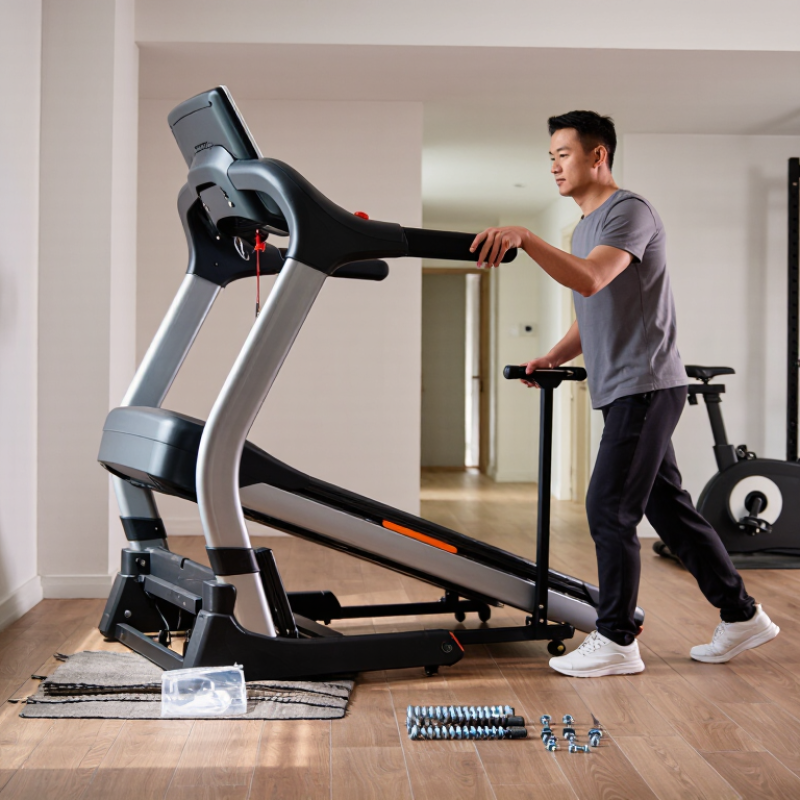
Assess the Equipment, Route, and Physical Risks
Before moving anything, identify its weight, shape, and loose parts. A treadmill’s deck can swing; weight plates can shift inside a rack. Check the manual, unplug power, secure cords, and remove detachable pieces. NIOSH’s Revised Lifting Equation uses 51 pounds as a load constant only under ideal conditions; reach, twisting, and repetition lower the recommended limit. That is not a personal safe-lifting allowance. If the load blocks your view or cannot be held close, use a rated dolly or get help.
Walk the route empty first. Measure doorways and turns, check stairs, and clear rugs, cords, and damp patches. Note tight landings and fragile flooring. A small wheel can catch on a threshold. Protect the floor with firm panels, not loose fabric that may slide. Test the equipment’s balance with a slight tilt before committing to a lift. Stop if it shifts unexpectedly. My own first instinct would be to “just push”; that can be a poor judgment on a slope.
Assess your physical condition as carefully as the route. The NIOSH equation reduces allowable load as lifting distance, height, and frequency increase, so a heavy unit may be unsafe even for a strong person. Keep the back neutral, move your feet rather than twisting, and agree on commands with any helper. If you feel sharp pain, lose your grip, or cannot control the descent, set it down safely and reassess. No move is worth a strained back.
Prepare the Machine and Clear the Moving Path
Before moving a treadmill, elliptical, or weight station, unplug it and follow the manual’s preparation steps. Remove loose weights and accessories, then secure the console, arms, and folding deck as directed. A swinging handle can catch a doorway or shift the machine unexpectedly. Small details matter. Measure the equipment and every doorway, hallway, and turn. Clear rugs, cords, shoes, and pets from the route. Check floor changes and stair edges; a path that looks open may still have a tight turn.
The NIOSH Revised Lifting Equation, described in its 1994 Applications Manual, uses 51 pounds as a load constant under ideal lifting conditions. Its recommended weight decreases with factors such as extended reach, twisting, and poor grip. This equation is not a safe-weight guarantee for moving gym equipment, but it shows why awkward shapes matter. Keep the machine close, avoid twisting, and stop if you cannot control its balance. I still double-check the route; measuring once can miss a narrow landing.
Tips: Put moving straps, gloves, and floor protection within reach before starting. Use a dolly only if the equipment is secured and the route suits it. Don’t attempt stairs or an unstable lift alone; ask for help or arrange professional moving support. A scratched floor is frustrating, but a sudden shift is worse.
Choose the Right Tools and Protect Floors
Before moving a treadmill or weight bench, check its manual for safe lifting points and removable parts. A furniture dolly with a rated capacity, sturdy straps, and low-friction sliders can reduce strain. Keep the equipment balanced; never rely on a strap to hold a loose or shifting part. A solo move should mean no helper, not no planning. If you cannot control the load, stop and ask for help.
Protect the floor before anything rolls. Sweep grit away, since one small stone can scratch hardwood under a heavy wheel. Lay down thick moving blankets or rigid floor-protection panels along the route. For carpet, sliders may help; on smooth floors, use a dolly with clean, non-marking wheels. Test it with a light load first. Small detail, big difference. Check doorways and turns, too, so the dolly does not bump trim or catch an edge.
Unplug the machine and secure loose cords, pedals, and handles. Move slowly, keeping the load close and your path clear. Avoid twisting while pushing, and use ramps only when they are firmly secured. I would not rush this part: even a short hallway can become awkward when the equipment blocks your view. Pause at each threshold, reset your grip, and stop if the load starts to tip or slide.
Move the Equipment Slowly With Safe Lifting Techniques
Move heavy fitness equipment slowly, not in one sudden heave. Clear the route, open doors, and remove loose weights or detachable parts. Check the equipment manual before disassembly. Keep the load close to your body, bend at your hips and knees, and avoid twisting while lifting. Small steps are safer than pivoting with a treadmill or rack in your arms. Pause if your grip slips or your breathing changes.
Use a hand truck or furniture sliders when the equipment’s shape allows it, and secure moving parts before shifting anything. The 1994 NIOSH Revised Lifting Equation gives 51 pounds as a load constant under ideal conditions; it is not a universal safe-lifting limit. Reach, twisting, and awkward grips can lower the recommended limit. That distinction matters. A compact weight bench may feel manageable until its frame catches on a doorway.
The U.S. Bureau of Labor Statistics reported 27.2 musculoskeletal-disorder cases per 10,000 full-time workers in 2023. Those workplace figures do not predict the risk of a home move, but they underline why strain deserves attention. Don’t force a solo lift because the equipment is already halfway across the room. If you cannot keep it balanced and close, set it down carefully and get help. I might still underestimate how awkward a machine feels until it turns a corner; that is a good reason to reassess before lifting again.
How to Move Heavy Fitness Equipment by Yourself? - Move the Equipment Slowly With Safe Lifting Techniques
| Moving stage |
Equipment or task |
Safe technique |
Stop and get help if… |
| Prepare |
Any powered machine |
Turn it off, unplug it, secure loose cords, and check the manual for approved moving points or disassembly steps. |
The power cord cannot be disconnected safely, or the manual requires more than one person. |
| Clear the route |
Doorways, halls, and floor surfaces |
Measure narrow openings, remove obstacles and rugs, and plan where to pause. Keep the path dry and well lit. |
The route includes stairs, a steep slope, a tight turn, or an uneven surface that cannot be managed without assistance. |
| Reduce the load |
Weight machines, benches, and racks |
Remove weights and detachable parts only as directed by the manufacturer. Keep small parts together and secure moving arms or pads. |
A component is stuck, unstable, or too awkward to remove without forcing it. |
| Position for lifting |
Compact, movable components |
Stand close, place feet securely, bend at the hips and knees, and use designated lifting points. Keep the load close to your body. |
You cannot get a firm grip, keep your balance, or lift without straining. |
| Move slowly |
Treadmills, ellipticals, and other bulky machines |
Use built-in transport wheels or a suitable furniture dolly if the manual permits. Push steadily, take short steps, and keep the machine controlled. |
The machine tips, rolls unpredictably, blocks your view, or cannot be controlled on the route. |
| Change direction |
Any heavy item |
Turn by moving your feet rather than twisting your torso. Pause and reposition before navigating a corner or doorway. |
The item must be lifted or tilted beyond your control to make the turn. |
| Set down and check |
All relocated equipment |
Lower the item gradually with fingers clear of pinch points. Reassemble and test stability according to the manual before use. |
The equipment rocks, a part is damaged, or a fastener or safety feature is missing. |
Safety note: Moving a large or heavy fitness machine alone can cause injury. Do not attempt a solo lift if the load is awkward, unstable, or beyond your comfortable capacity; use a helper or a qualified moving service.
Reassemble, Position, and Check the Equipment Before Use
Once the equipment is in its new room, reassemble it using the manufacturer’s instructions, not memory. Lay bolts and washers on a towel, and match each part to your photos. Tighten fasteners evenly; over-tightening can damage threads. NIOSH’s Revised Lifting Equation uses a 51-pound load constant only under ideal lifting conditions. Reach, twisting, and repeated lifts reduce the recommended load, so this figure is not a safe limit for every person or machine.
Position the unit on a firm, level floor, with clear space around moving parts and a reachable power outlet. Check that the frame does not rock. Inspect cables, pins, guards, and adjustment locks before testing. Start with the lowest resistance and move each mechanism slowly, listening for scraping or clicking. I have found one missed pin can change the feel of an entire machine. Stop if anything shifts, binds, or looks misaligned; get qualified help rather than guessing.
Tips:
Keep spare hardware separate. Use a flashlight to inspect dark joints. Test the machine unloaded first, then add resistance gradually. Recheck bolts after the first short session. Do not use the equipment if a safety lock or cable feels loose.
Conclusion
Moving heavy fitness equipment by yourself starts with a careful assessment. Check the machine’s size, weight, and moving parts, then plan a clear route and consider hazards such as stairs, tight turns, and slippery floors. Prepare the equipment by unplugging it, removing loose accessories, and securing any parts that could shift. Clear obstacles before you begin, and protect floors and doorways with suitable coverings.
If you are wondering, “How to move heavy fitness equipment without professional help?”, use appropriate moving tools, such as a dolly or lifting straps, and ask another person to assist when possible. Bend your knees, keep the load close to your body, and move slowly without twisting or rushing. Once the equipment is in place, reassemble any removed parts, check that everything is stable and secure, and test the machine carefully before using it.

 PNZ Fitness