A power tower can feel steady on a hard floor and wobble noticeably on carpet. The difference often comes from compressed fibers, uneven padding, or feet that do not sit flat. A thick rug may look level while hiding a soft dip beneath one corner. Even a small shift can become obvious during pull-ups, dips, or knee raises. That movement deserves attention before training continues.
How to stabilize a wobbly power tower on carpet? Start by checking the assembly and tightening the frame’s fasteners according to the manufacturer’s instructions. Then inspect each foot and press gently on the structure from different sides. Notice whether one corner sinks farther or the base rocks across the floor. Small details matter. A firm, level platform beneath the tower may help distribute its weight, but it must be large and stable enough for the equipment. Do not use loose scraps or stacked objects that can slide. Carpet can also compress over time, so a setup that feels solid today may need another check later. That part is easy to miss. This guide looks at practical ways to assess the floor, improve contact with the base, and test stability with controlled movements. It cannot make every carpet suitable; follow the equipment maker’s safety guidance, and stop using the tower if it still shifts. Sometimes, the carpet is the problem.
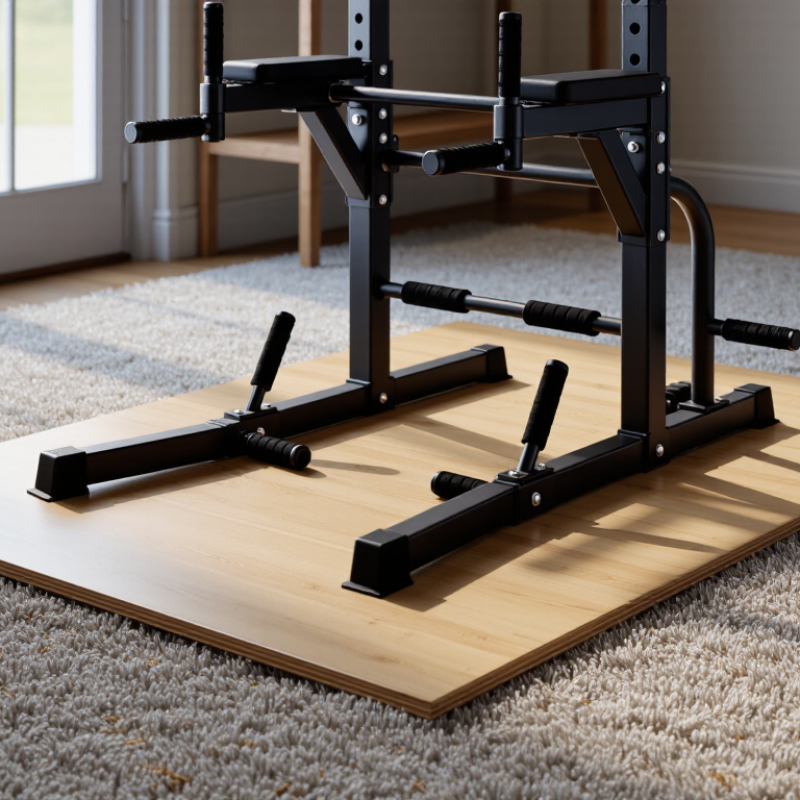
Carpet affects a power tower through compression, not just softness. When you load one side during a pull-up, the carpet pile and pad compress beneath that foot. The frame can tilt slightly, then shift when your weight moves. It may feel steady while unloaded. That is not a reliable test.
The Carpet and Rug Institute’s residential installation guidance commonly caps carpet cushion at 7/16 inch, with requirements varying by carpet and application. This is an installation specification, not a power-tower stability test. Still, it shows how much compressible material may sit beneath the carpet. Thick pile over a soft pad can let the tower’s feet settle unevenly. A firm, low-pile surface usually gives clearer contact. Small difference, real effect.
Place the tower on the flattest area, away from seams and uneven transitions. Press down on each foot and check for rocking before exercising. Then apply gentle pressure to the frame from different directions. Do not assume a plywood sheet solves everything; it can flex or slide on carpet. If you use a rigid platform, make it wider than the tower’s footprint and keep its underside from slipping. I would recheck stability after the carpet has compressed, because the first setup can feel reassuring and still change over time.
Prepare the carpeted area before assembling the power tower. Move furniture, toys, and loose rugs away, then check for floor slopes, thick padding, and carpet seams beneath the feet. A dense, low-pile carpet is usually more stable than plush carpet, but the subfloor matters too. Press each foot location firmly; soft spots or a rocking floor are warning signs. Keep the tower clear of walls and leave enough space for safe mounting and dismounting.
Set the tower on a hard, level surface whenever possible. If carpet cannot be avoided, follow the equipment maker’s instructions and consider a rigid, level platform with a nonslip underside, sized to support every foot. Test it before use. Push gently from several directions and check for movement. Recheck after the first few sessions; carpet can compress unevenly. I would not improvise with loose shims. A small wobble is easy to dismiss.
The CDC reports that about 14 million U.S. adults aged 65 and older report falling each year, underscoring why clear walking routes and secure footing matter. This figure does not specifically measure home-gym accidents, but it supports careful floor preparation. ASTM F2276 covers general fitness-equipment safety requirements; it does not confirm that a particular carpet or floor can support your setup. When in doubt, relocate the tower to a firm surface.
Inspect the base before placing a power tower on carpet. Check that every foot is present, firmly attached, and free from cracks or bent metal. Tighten bolts in the order shown in the manual; uneven tightening can twist the frame. Measure the footprint and compare it with the available floor area. The base should sit flat, not bridge a raised seam or thick rug edge. ASTM F2276-23 provides a recognized framework for fitness-equipment stability and structural integrity, but it cannot guarantee stability on every carpet. No rocking.
Assemble the tower on a level, hard surface if possible, then move it carefully onto the carpet. Press each corner of the base and watch for a foot sinking or lifting. Carpet compresses unevenly, especially over soft padding. If the frame shifts, use firm, non-slip furniture pads under all contact points, not scraps of cardboard. Recheck the fasteners after the first few workouts. One limitation: a quick hand test cannot reproduce the forces of every pull-up or dip.
Tips: Check the tower’s rated user load in its manual, and never exceed it. Keep the feet fully supported, with no pad extending beyond the base. If movement persists, relocate the tower to a firm floor rather than adding improvised weights.
A power tower needs a firm, level base because carpet can compress unevenly under its feet. Even a small amount of rocking may become more noticeable during pull-ups or dips. Check the floor before assembly, and press down near each corner to spot soft patches or a sloping surface. Small details matter. A thick rug over soft padding can be less stable than it looks.
If possible, place the tower on a hard, level floor. When that is not practical, use a rigid, purpose-made equipment platform that supports all feet and extends beyond the tower’s footprint. Follow the equipment instructions, and make sure the platform cannot slide or tip on the carpet. A thin sheet of wood or loose blocks may flex, shift, or create new hazards. Not quite enough. After setup, test the frame gently without loading it, then recheck the feet after the carpet settles. If any movement remains, change the location rather than trying to compensate with folded fabric or improvised wedges. A perfectly level-looking setup can still feel wrong; trust the movement you can see and feel.
A power tower can feel firm on carpet and still shift when you dip or raise your knees. Carpet pile compresses unevenly, especially under narrow feet. ASTM F2276-23, a fitness-equipment stability standard, assesses equipment under defined test conditions; it does not give one safe carpet-compression limit for every home. So check the actual floor, not just the product’s load rating. Press each upright gently, then inspect whether any foot lifts or the frame rocks. Watch the carpet edge, too.
Test it carefully. Keep your feet on the floor and apply light pressure to the handles before attempting a controlled repetition. Stop if the frame slides, tilts, or makes a new clicking sound. A broad, rigid platform with a non-slip underside may spread the load, but it must sit flat and must not wobble. Avoid stacking loose boards or soft pads. Recheck the setup weekly, after moving the tower, and after the carpet has been vacuumed or compressed. Note any change in rocking or foot contact; I would not rely on a quick glance alone. Stability can change slowly.
Check every foot for cracks, missing parts, or loose connections. Tighten bolts as the manual directs. No rocking.
Carpet and padding can compress unevenly beneath the feet. A thick rug edge or soft patch may tilt the base.
Press near each corner and watch for a foot sinking or lifting. Check for sloping areas and raised seams.
If possible, assemble it on a hard, level surface, then move it carefully. Keep all feet fully supported.
Use a rigid, purpose-made equipment platform that supports every foot. Make sure it cannot slide or tip.
No. They may shift, compress, or flex under the frame. A quick fix can create a new problem.
Test the frame gently without loading it. Watch the feet closely. A hand test is useful, but imperfect.
Recheck fasteners after the carpet settles and after your first few workouts. Follow the manual’s rated user load; never exceed it. If movement remains, relocate the tower.
Carpet can make a power tower feel less stable because its soft, uneven surface may compress beneath the feet and allow the frame to shift during exercise. To reduce this risk, choose a flat area with enough clearance, move loose rugs or objects aside, and check that the carpet beneath the tower is not bunched or uneven. Before use, inspect the base, fasteners, and frame, and tighten any loose connections according to the equipment instructions.
How to stabilize a wobbly power tower on carpet? Place it on a firm, level support surface designed to distribute its weight, ensuring that all feet sit securely and evenly. Avoid improvised supports that can slide or tip. Once the tower is set up, gently test it from different directions before exercising. Recheck the base and connections regularly, especially after moving the equipment or using it on a carpet that may compress over time.

PNZ Fitness