How Much Space Is Needed for a Full Power Rack Setup?

Time:2026-08-07 Author:Madeline
0%

Setting up a full power rack can significantly enhance your home gym experience. But how much space do I need for a full power rack setup? This question often arises for fitness enthusiasts looking to maximize their workout space. Understanding the spatial requirements is essential for ensuring safety and functionality.

A typical power rack occupies a footprint of about 4 feet by 6 feet. However, this dimension doesn’t account for the surrounding area needed for exercises. Additional clearance is necessary for movements like squats and bench presses. Without sufficient space, workouts can feel cramped and uncomfortable.

Moreover, a well-planned area increases convenience. It allows for easy access to weights and accessories. You might discover that you need more space than you initially considered. Reflecting on your needs can prevent potential frustration. Ultimately, careful consideration of your workout environment is key to achieving a successful setup.
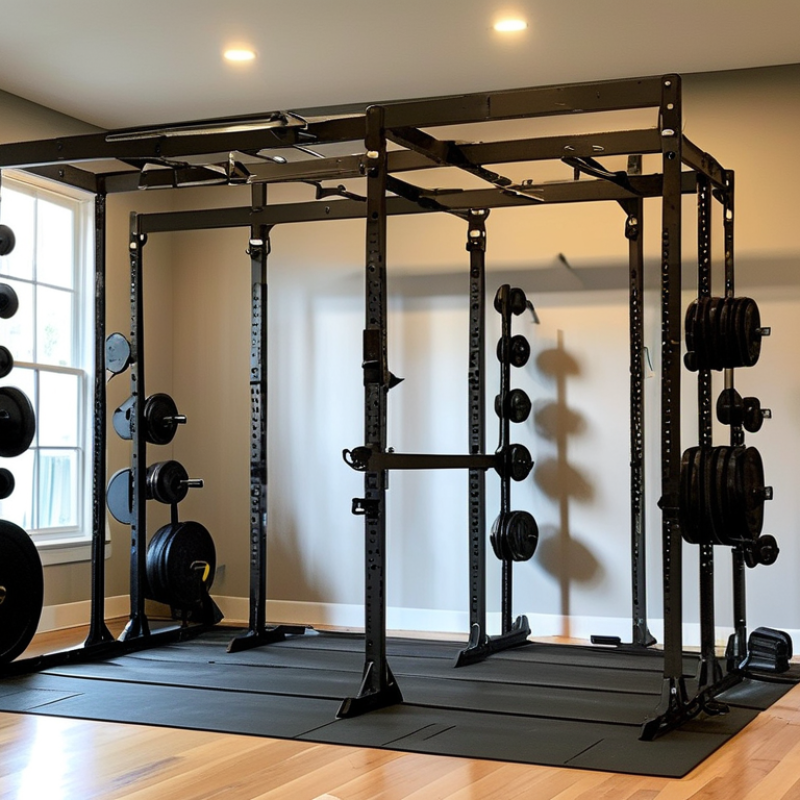
How Much Space Is Needed for a Full Power Rack Setup?

Determining the Optimal Floor Space for Power Rack Setups

When determining the optimal floor space for a power rack setup, it’s essential to consider several factors. A standard power rack typically measures about 4 feet wide, 4 feet deep, and 7 feet tall. Based on industry experts, you should allocate at least 10 feet by 10 feet of space to accommodate a power rack and ensure comfortable movement around it. This space allows for exercises like squats, bench presses, and deadlifts.

Tips: Always account for any additional equipment you plan to use. Keep space available for weights and benches to avoid a cluttered workout area.

Moreover, users often underestimate the need for safety and accessibility. Having extra space helps prevent accidents. A report from the National Strength and Conditioning Association recommends leaving at least 2 feet of clearance on either side of the rack. This standard ensures safer setups, especially for heavy lifts. Reflecting on your space early in your fitness journey can save you from future frustrations related to a cramped setup.

Tips: Measure your area before purchasing equipment. Visualizing your layout can help optimize workout flow and safety.

Standard Dimensions of Full Power Racks and Their Footprint Impact

When setting up a full power rack, understanding its dimensions is crucial. A standard power rack typically measures around 4 feet in width and 5 to 7 feet in height. These dimensions can vary based on the design and purpose of the rack. The footprint of such a setup is generally about 4 by 6 feet. This space requirement is vital for both your workout safety and accessibility.

Consider the additional space needed for your movements. Lifting requires safe distances. You should also factor in room for weights, a bench, and other equipment. A cramped space can lead to accidents. Envision your workouts; imagine not being able to reach your weights easily.

Ultimately, plan your workout area thoughtfully. If space is tight, research compact options. Remember, bigger isn't always better. Reflect on what you truly need. Create an efficient setup where safety meets functionality. Adjusting to limitations can lead to innovative solutions.

Recommended Clearance for Safe Usage Around Power Racks

When setting up a full power rack, safety should be a top priority. The recommended clearance around power racks is often overlooked. According to a report by the National Strength and Conditioning Association, an ideal space of 3 to 4 feet on all sides is prudent for safe usage. This space not only prevents injury but also allows for easy movement and access to weights and equipment.

In a practical workout environment, clutter can be hazardous. Ensure your rack is placed in an area void of obstacles. Many gym-goers underestimate how crowded a gym can get during peak hours. Leaving adequate space reduces the risk of accidents, particularly when performing heavy lifts. Effective organization around the rack encourages safer lifting practices.

Tips: Always use floor markings to define your workout area. This serves as a visual reminder for both you and others. Regularly inspect the surrounding space for any changes that could impede safety. A clear space enhances your focus and performance. Remember, a few extra feet can prevent a serious injury. Taking the time to assess your environment is essential for a successful training routine.

How Much Space Is Needed for a Full Power Rack Setup? - Recommended Clearance for Safe Usage Around Power Racks

Component Recommended Space (Length x Width x Height) Minimum Clearance (Recommended)
Power Rack 6 ft x 4 ft x 7 ft 2 ft on each side
Barbell Space 7 ft 2 ft on each end
Weight Plate Storage 2 ft x 2 ft 1 ft clearance around
Bench (if included) 5 ft x 2 ft 2 ft clearance on ends
Safety Zone N/A 5 ft all around

Evaluating Space Requirements Based on Training Styles and Equipment

When planning a home gym with a full power rack, space requirements can vary significantly. Your specific training style, the equipment you choose, and the layout of your gym can affect how much room you truly need. For strength training, a typical power rack setup requires at least 8 feet in height and 6 feet in width. This allows for safe barbell movements and sufficient space to maneuver.

Consider the floor space as well. A standard power rack occupies about 4 feet by 4 feet. However, you'll also need extra space around it for additional equipment, such as benches and weights. Aim for at least 3 feet of clearance on all sides. That said, training in a smaller area can still be effective with careful planning.

**Tips:** Use a measuring tape to visualize your space. Mark out the dimensions of your power rack, including necessary clearances. Reflect on your specific training style. If you're focused on Olympic lifting, more vertical height may be essential. A multifunctional area can make small spaces feel larger. Think about using folding benches or compact weights.

Comparison of Compact vs. Standard Power Rack Configurations

When considering a power rack setup, understanding the difference between compact and standard configurations is crucial. A compact power rack typically occupies a footprint of around 4x4 feet. This smaller size suits limited spaces. Conversely, a standard power rack requires more room, often needing up to 6x6 feet. According to a study by the National Strength and Conditioning Association, around 30% of home gym enthusiasts favor compact setups due to space limitations.

However, compact racks may not support all types of movements. They might lack depth or height needed for specific exercises. In contrast, standard racks offer better versatility. They often come with additional features like pull-up bars and attachment points for accessories. This gives users better training flexibility, essential for progressive strength development.

Some users report dissatisfaction with the limited equipment compatibility of compact racks. They feel restricted in exercise variation. Standard racks provide room for expansion, allowing the addition of other gym tools. It's vital to assess both space availability and workout goals when deciding. A well-thought-out choice can enhance the workout experience significantly.

Space Requirements for Power Rack Configurations

This chart compares the square footage required for compact and standard power rack setups, highlighting the efficiency of space usage.

FAQS

: What is the recommended space for a power rack setup?

: At least 10 feet by 10 feet is ideal for a power rack. This allows for safe movement around the equipment.

Why is clearance important around a power rack?

At least 2 feet of clearance on each side prevents accidents. It is crucial for safer heavy lifting.

How can I ensure my workout area is safe?

Measure your available space and visualize your layout. This helps avoid a cluttered and cramped setup.

What dimensions should I expect for a standard power rack?

A standard power rack measures about 4 feet wide and between 5 to 7 feet tall.

Are there alternatives if I have limited space?

Yes, consider compact options. A larger space isn’t always necessary for effective workouts.

What should I keep in mind when planning my workout area?

Think about additional equipment and movement space. Reflect on your needs for safety and functionality.

How can I avoid frustration with my fitness setup?

Plan early and consider future space requirements. This will help you avoid a cramped and inefficient area.

Is there a risk with a tight workout area?

Yes, a cramped space increases the risk of accidents and limits your ability to access weights easily.

Conclusion

When considering the question "How much space do I need for a full power rack setup?", it is essential to determine the optimal floor space required for an efficient and safe training environment. Standard dimensions of full power racks typically require a footprint of approximately 4 feet by 6 feet, but this can vary based on the specific model. Additionally, it is crucial to account for recommended clearance around the rack, which may be around 3 feet on all sides to ensure safe usage during workouts.

Evaluating space requirements also depends on individual training styles and the additional equipment being used, such as benches or weights. A compact power rack configuration can be a viable alternative for those with limited space, while standard setups may be better suited for more extensive training setups. Ultimately, understanding these factors will help individuals make informed decisions about their space needs for a full power rack setup.

Madeline

Madeline

Madeline is a dedicated marketing professional with a wealth of expertise in our company's core offerings. With a keen understanding of the industry, she brings a unique perspective to her role, consistently delivering high-quality content that highlights the superior aspects of our products. As......