A hard workout can leave your calves tight, your quads tender, and stairs surprisingly difficult. A massage gun may help ease that post-exercise stiffness and temporarily improve range of motion. It is not a magic reset. Exercise physiologist Dr. David Behm’s research supports a measured takeaway: percussive massage may help mobility, but it should not be mistaken for a replacement for recovery. That distinction matters. Feeling looser does not necessarily mean your muscles have repaired faster or that you are ready for another maximal session.
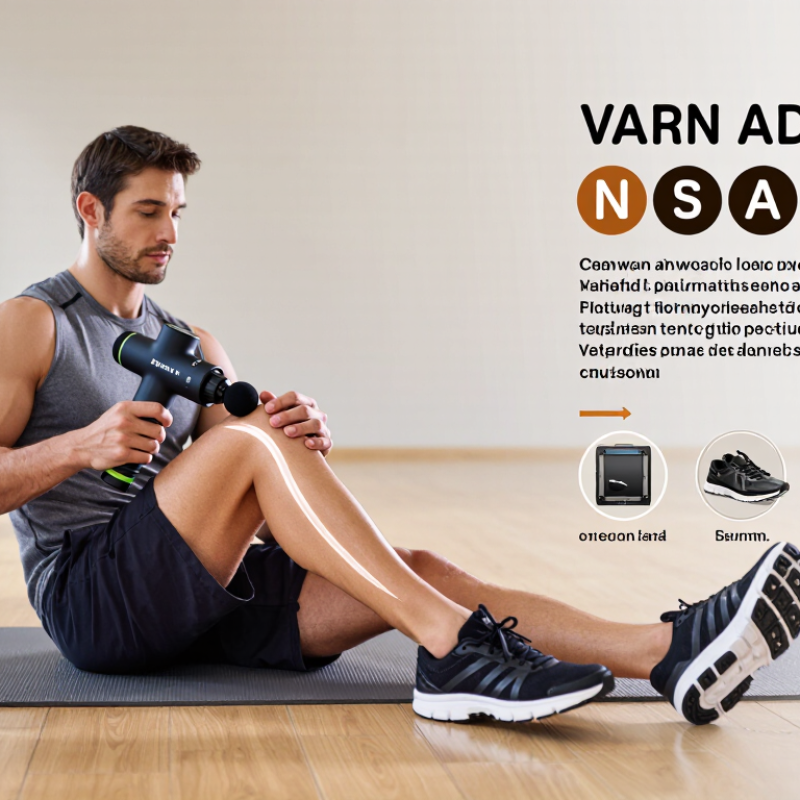
So, How to use a massage gun for post-workout recovery? Start with a low setting and a soft attachment. Glide slowly over a broad muscle, such as the thigh, for brief passes. Keep the device moving; do not grind into one sore point. A few minutes can be enough. Stop if you feel sharp pain, numbness, or worsening discomfort, and avoid bones, joints, and injured areas. Hydration, sleep, and sensible training still do the heavy lifting. The gun is only one tool.
There is room for judgment here. A tender spot can feel satisfying to press, yet more pressure is not automatically better. Think of the device as a gentle prompt for relaxation, not a test of toughness. This guide explains practical timing, pressure, and muscle selection, while noting when rest or professional advice makes more sense. The aim is useful relief, not a dramatic promise.
How Percussion Massage Fits Into Post-Workout Recovery
After a hard workout, a percussion massage gun can provide brief, targeted comfort to tired muscles. It uses rapid pulses against the body, creating pressure that some people find soothing. Think of it as one option in recovery, not a shortcut to rebuilding muscle.
Wait until your breathing settles, then choose a low setting and a soft attachment if available. Move slowly over the larger muscle groups, such as your thighs or calves. Keep the device gliding; avoid pressing hard or holding it over one spot. A minute or two per area is often plenty. It should feel comfortable. Stop if you notice sharp pain, numbness, or unusual bruising.
Percussion massage may help ease the feeling of tightness for a while, but it does not replace sleep, fluids, or enough food after training. Research on massage tools is still developing, and results can vary from person to person. I’d treat it as a small part of a routine, not proof that a workout has been fully “recovered” from. Be cautious around joints, bones, the front of the neck, and injured or irritated areas. If soreness is severe or keeps returning, ask a qualified health professional before using a device there.
How to Use a Massage Gun for Post-Workout Recovery
Typical delayed-onset muscle soreness (DOMS) timeline after exercise
DOMS often begins 12–24 hours after exercise, peaks around 24–72 hours, and usually resolves within 5–7 days. A massage gun may provide temporary relief, but it does not guarantee faster recovery. If you use one, apply light pressure to muscle tissue—not bones or joints—and stop if you feel pain.
Step 1: Check Contraindications Before Using a Massage Gun
Before using a massage gun, check the area and your health history. Avoid treating open wounds, fresh bruises, suspected fractures, infection, or a recently injured area. Do not massage a swollen, warm, painful calf; these symptoms can signal a blood clot and need urgent medical assessment. The CDC estimates that up to 900,000 people in the United States are affected by deep vein thrombosis or pulmonary embolism each year. If you take blood thinners, have reduced sensation, osteoporosis, or recently had surgery, ask a clinician before use. A tight muscle is not always a safe target. That assumption deserves a pause.
Research is encouraging but limited. A 2020 study by Konrad and colleagues found that five minutes of percussive treatment increased ankle range of motion in 16 healthy adults, without improving muscle performance. That result does not establish safety for people with injuries or medical conditions. Keep the device away from the neck, spine, and bony areas, and stop if you feel sharp pain, numbness, or worsening discomfort.
Tips: Start on a healthy muscle with the lowest setting, using light pressure for 15–30 seconds. Don’t press hard to “break up” a knot. If symptoms feel unusual, skip the session and get professional advice.
Step 2: Start at Low Speed and Target One Muscle at a Time
Set the massage gun to its lowest speed before touching it to your body. Hold the device lightly, letting the attachment move across the muscle rather than pressing hard. Start with a large area, such as the middle of your thigh, and move slowly for about 30 seconds. Keep the head away from your kneecap, hip bone, and any tender or bruised spots. Gentle pressure is enough.
One muscle at a time. Pause briefly, then notice how the area feels before continuing. If the sensation is comfortable, spend up to 60 seconds on that muscle, shifting the device a few inches at a time. A sharp sting, tingling, or numbness means stop; recovery should not feel like a test of endurance. People often move too quickly because the vibration feels pleasant, but that can make it harder to judge pressure. I have found that a slower pass gives clearer feedback, though the result can vary from person to person. Avoid using the gun on a fresh injury, and seek professional advice if pain persists or worsens.
Step 3: Glide Gently for 30–60 Seconds; Avoid Bones and Joints
After training, place the massage gun’s soft attachment on the muscle belly, not directly over a bone or joint. Move it slowly across the muscle for 30–60 seconds, using light pressure and keeping the device in motion. For example, sweep along the calf from just above the ankle toward the knee, pausing only briefly on a tight spot. The sensation should feel manageable, not sharp or numb. Stop if pain, tingling, or unusual bruising occurs.
Research supports cautious use, but it does not establish 30–60 seconds as a proven recovery dose. A 2020 randomized trial by Konrad and colleagues found that five minutes of percussive treatment on the calf improved short-term ankle range of motion by about 5.4 degrees. That small study measured mobility, not faster muscle repair, and its treatment lasted longer than this step. Keep expectations modest; feeling looser is not proof that tissue has healed.
Tips: Use the lowest comfortable setting and let the device’s weight do most of the work. Avoid the kneecap, shin, ankle bones, and the front of the neck. If a muscle feels tender, reduce pressure or skip it. A minute can feel surprisingly long when the area is sore. Do not chase discomfort just because it seems productive.
Step 4: Note the Evidence: A 2020 Trial Found 5 Minutes Improved Ankle Range of Motion
After a hard leg session, your calves may feel tight when you lower your heel from a step. A 2020 study by Konrad and colleagues, published in the Journal of Sports Science and Medicine, tested five minutes of percussive massage on the calf muscles. Participants showed improved ankle dorsiflexion range of motion afterward. The study did not establish that a massage gun speeds muscle repair or prevents soreness. That distinction matters.
To try a similar approach, sit comfortably and use a low setting on the calf, moving slowly over the muscle belly. Keep the head off the ankle bone and other bony areas. Five minutes was the study protocol, not a universal prescription. Stop if you feel pain, numbness, or unusual tingling. Gentle pressure is enough. I’d check ankle movement before and after, such as bringing the knee toward a wall while keeping the heel down. Record the distance, but don’t treat one better measurement as proof of lasting recovery. The trial examined an immediate response in a specific setting; it cannot tell us whether the same result holds after every workout, or for people with injuries. A small caveat, but an important one.
2026 How to Use a Massage Gun for Post Workout Recovery? - Step 4: Note the Evidence: A 2020 Trial Found 5 Minutes Improved Ankle Range of Motion
| Evidence dimension |
What the evidence indicates |
Practical meaning |
| Study timing |
A 2020 study examined the immediate effects of a 5-minute percussive massage treatment. |
The reported result concerns a short-term response, not long-term recovery. |
| Area treated |
The treatment was applied to the calf’s plantar-flexor muscles, which contribute to ankle movement. |
For a similar goal, focus on the calf muscle rather than applying pressure directly to the ankle joint. |
| Outcome measured |
Researchers assessed ankle range of motion, including dorsiflexion—the movement of bringing the foot toward the shin. |
Range of motion is a mobility measure; it is not by itself a measure of muscle repair or complete recovery. |
| Reported finding |
The study reported an improvement in ankle range of motion after the 5-minute treatment. |
A brief session may temporarily improve ankle mobility for some people; individual responses can differ. |
| What it does not establish |
An immediate change in range of motion does not prove faster muscle healing, reduced injury risk, or better performance over time. |
Treat massage-gun use as an optional mobility or comfort tool, not a replacement for sleep, nutrition, or appropriate training recovery. |
| Post-workout use |
Use gentle pressure and move slowly over the calf muscle; stop if the sensation becomes painful or causes numbness. |
Avoid bony areas, joints, bruises, and injured or irritated tissue. Do not use a massage gun to treat persistent pain without professional advice. |
Evidence note: The 2020 finding supports a possible short-term range-of-motion benefit. It should not be interpreted as proof that massage-gun treatment speeds post-workout recovery.
Conclusion
How to use a massage gun for post-workout recovery? Begin by checking whether percussion massage is appropriate for you. Avoid using a massage gun on injured, swollen, or unusually painful areas, and seek professional advice if you have a health condition or are unsure whether it is safe. The goal is gentle muscle comfort—not to push through pain or treat an injury.
Choose a low speed and work on one muscle at a time, moving the device slowly and lightly over the muscle for about 30–60 seconds. Avoid bones and joints, and stop if you feel pain, numbness, or worsening discomfort. Research offers some limited support for this approach: a 2020 trial found that five minutes of percussion treatment improved ankle range of motion. This finding is encouraging, but it does not guarantee the same result for everyone; use the device as one possible part of recovery, alongside rest and appropriate movement.

 PNZ Fitness