
In the hyper-competitive global commercial fitness equipment space, the demand for precision engineering, technological integrations, and agile manufacturing has positioned Chinese factories at the core of the global supply chain. Shandong Province, home to fitness manufacturing hubs, has transitioned from low-cost casting to premium high-precision engineering. From commercial exercise bikes to specialized rehab devices like Pilates Reformers, leading manufacturers integrate advanced metallurgy, smart sensor connectivity, and ergonomic safety frameworks.
As commercial gym operators, boutique studio owners, and medical fitness buyers scale their installations globally, understanding the capabilities of top-tier factories becomes essential. This whitepaper analyzes manufacturing processes, materials selection, IoT roadmaps, and compliance protocols that define the highest standards in today's fitness supply network.
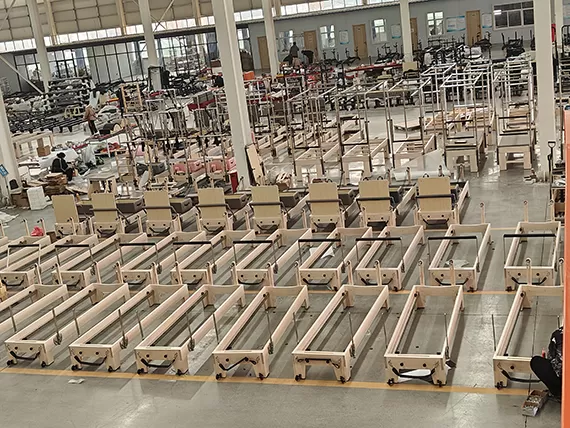
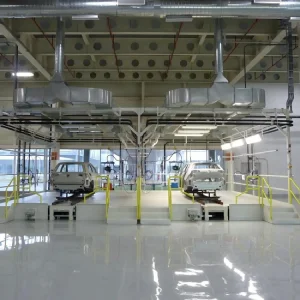
Modern fitness equipment production relies on advanced automation. Leading manufacturers in China have implemented Factory 4.0 standards. By utilizing high-speed stability automation, automated welding robots, and precision cutting systems, suppliers can guarantee consistent engineering tolerances down to the millimeter.
Utilizing CNC tube-bending machinery and continuous laser cutters, factories minimize human error in structural framework fabrication. This guarantees that frame geometries remain identical across thousands of units, providing uniform structural integrity.
By deploying automated automobile-grade spraying and powder coating lines, exercise bike chassis receive corrosion-resistant surfaces. This prevents oxidization in high-humidity environments, extending commercial equipment lifespans.
Top suppliers consolidate raw material sourcing, sheet metal fabrication, machining, upholstery sewing, and electronics testing on-site. This vertical integration keeps quality control consistent and shortens manufacturing lead times.
For global procurement teams, this level of automation ensures consistent manufacturing quality. The integration of structural engineering with protective coating systems minimizes early equipment failures, which reduces total cost of ownership (TCO) for commercial operators.
The commercial indoor cycling landscape is shifting from mechanical resistance designs toward smart, interactive connected fitness systems. Product engineers are incorporating biomechanical and digital developments to create highly customized workout experiences.
| Feature Category | Legacy Mechanical Standards | Next-Gen Smart System Solutions | Impact on Commercial Operations |
|---|---|---|---|
| Resistance System | Manual friction pads, felt pads | Electromagnetic Induction (EMS) / Servo-controlled Magnetic | Zero friction wear, noise-free operation, digital adjustment |
| Connectivity Protocols | Analog displays, no network connectivity | Bluetooth FTMS, ANT+, NFC, cloud API endpoints | Integration with gym management software, Apple Health, Zwift |
| Power Management | AC wall power adapters, batteries | Eco-friendly self-powered generator systems (kinetic energy) | Zero electrical installation costs, green building alignment |
| Ergonomic Adaptation | Coarse manual pin adjustments | Gas-assist infinite adjustment, bio-fit posture modeling | Reduced joint strain, customizable fitting for varied users |
International buyers demand manufacturing partners that offer more than simple component assembly. Modern sourcing requires deep engineering collaboration (ODM), stable raw material pipelines, and predictable lead times. Sourcing managers evaluate suppliers using structured performance matrices:
Experienced factories collaborate early via 3D CAD modeling and Finite Element Analysis (FEA). This process identifies stress concentrations on structural frames, refining designs to ensure products withstand commercial-use cycle loads.
Industrial suppliers subject test units to rigorous physical validation, including 1,000,000-cycle crank load testing, salt spray testing for metal parts, and simulated drop testing for transport packaging to minimize shipping damage.
From anodized structural aluminum to premium maple glulam, raw materials undergo strict verification. Testing moisture contents in wooden parts and carbon ratios in steel tubes guarantees uniform performance and longevity.
Founded in 2017 with a mission to design and manufacture high-quality, durable equipment, Shandong PNZ Fitness Co., Ltd. (also operating with Shandong Highwind Fitness Equipment Co., Ltd.) draws inspiration from classic movement mechanics and biomechanics to deliver reliable performance and longevity.
PNZ's commitment to manufacturing quality is visible in every phase of design and production. Every piece of equipment is built using premium components, including anodized aluminum, beech glulam, birch wood, and durable faux leathers. This selection ensures durability and clean styling, improving the user experience in studio and commercial environments.
Over 7 years of product development has enabled PNZ Fitness to grow into a specialized fitness hardware exporter in China. The company delivers integrated engineering, manufacturing, and support solutions. Today, PNZ supports over 150 distributors, fitness centers, and specialized studios worldwide.
Building a solid foundation for long-term business success by delivering reliable commercial-grade equipment and professional customer service based on transparency and accountability.
Customer Achievement: Partnering closely with studios, fitness centers, and global distributors.
Innovation: Continuously researching, updating, and improving our manufacturing processes.
Integrity & Responsibility: Operating with open transparency, maintaining liability control, and aiming for long-term sustainability.
Commercial procurement requires customized, end-to-end solutions that fit unique business configurations. Experienced manufacturing suppliers offer modular procurement packages tailored for different fitness markets:
High-durability indoor cycling bikes equipped with self-generating power systems, heavy flywheels, and Bluetooth/ANT+ capabilities to support high daily usage.
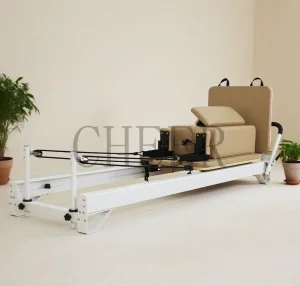
Specialized frames featuring low-step entry, micro-adjustable resistance levels, and biometric sensors designed for physical therapy and cardiopulmonary rehab.
Custom-finished equipment utilizing selected natural woods, matte anodized metals, and custom-embroidered upholstery designed for upscale hotels and apartments.
Entering international markets requires strict compliance with regional safety, technical, and importing guidelines. Selecting a supplier with established certifications helps prevent delays at customs and guarantees equipment safety:
Commercial-grade exercise bikes must meet standards like EN957 Class S (Commercial Use) in Europe, and ASTM F1250 in North America. These standards specify guidelines for load testing, guard placements, and emergency stopping mechanisms.
Any equipment using Bluetooth, Wi-Fi, or integrated consoles requires certifications like CE-RED (Europe), FCC (USA), or TELEC (Japan) to ensure correct wireless communication and safety.
Experienced exporters provide detailed HS code classifications, optimized container configurations, and correct customs paperwork. This helps minimize importing delays and reduces potential shipping overheads.
 PNZ Fitness