The global fitness mat market has undergone a significant paradigm shift over the past decade. Previously considered a low-tech commodity, modern exercise mats are now highly engineered polymers designed to meet rigorous standards for ergonomic safety, slip resistance, chemical compliance, and durability. Tier-1 manufacturing facilities utilize state-of-the-art closed-cell foam extrusion, thermal bonding, and precision compression molding to deliver consistent structural integrity.
For B2B buyers, distributors, and wellness brands, sourcing from a reliable factory requires an understanding of raw material science. Materials such as Thermoplastic Elastomers (TPE), Nitrile Butadiene Rubber (NBR), Polyurethane (PU), and Ethylene-Vinyl Acetate (EVA) each exhibit distinct characteristics in terms of density, tensile strength, rebound elasticity, and environmental footprints. Top-tier exercise mat factories are characterized by their adherence to international environmental directives and advanced quality control systems.
Utilizing high-performance polymers (TPE, PU, NBR) with zero phthalates, heavy metals, or toxic chemical binders to ensure global environmental compliance.
Optimizing density parameters and compression deflection ratios to provide critical joint cushioning and non-slip traction under dynamic load conditions.
Employing automated automated cutting, embossing, and thermal bonding processes that minimize energy consumption and eliminate glue contamination.
Shandong PNZ Fitness Co., Ltd. Pilates was founded in 2017 with a singular mission: to design and manufacture high-quality, durable Pilates equipment that stays true to the authentic methods pioneered by Joseph Pilates. Drawing inspiration from the original Pilates philosophy, we meticulously craft each product to deliver the highest performance and longevity.
Our commitment to excellence is reflected in every aspect of our design and production. Each piece of equipment is constructed using premium materials, including anodized aluminum, beech glulam, birch wood, and the finest faux leather, ensuring not only durability but also an aesthetic quality that enhances the overall user experience.
PNZ Fitness is dedicated to honoring the core principles of Pilates in our product designs. Our equipment is built with a focus on the most essential elements that define the ideal tools for Pilates practice:
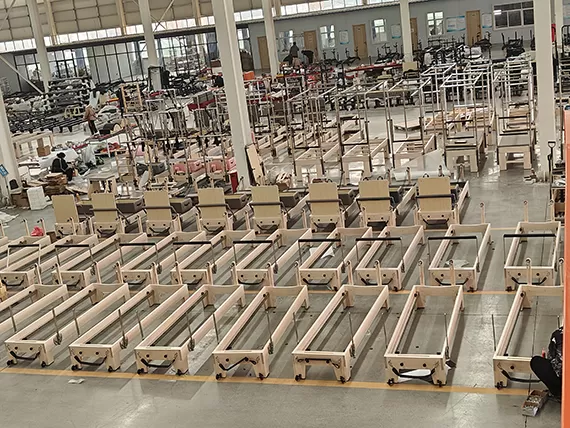
With over 7 years of focused development, PNZ Fitness has rapidly emerged as one of the leading high-end brands of Pilates equipment in China. We specialize in providing professional Pilates solutions, integrating design, development, production, and operations seamlessly. In addition to manufacturing, we are committed to offering unmatched sales and after-sales services to ensure that our customers receive comprehensive support.
Our growing reputation for innovation, precision, and reliability has helped us establish partnerships with more than 150 distributors and Pilates studios across the globe. We are proud to be the preferred choice for Pilates solutions worldwide, recognized for our consistent dedication to quality and customer satisfaction.
Enterprise Vision: Our vision is to build a solid foundation for long-term enterprise success. We strive to deliver first-class service, underpinned by honesty and faith, while continuously improving our business performance and efficiency.
Our customers' success is our success. We are committed to helping Pilates studios and individuals achieve their fitness goals.
We are constantly evolving, researching, and innovating to improve our equipment and services.
We conduct our business with the highest level of honesty and transparency in all dealings.
We take responsibility for every product we create, ensuring quality, safety, and sustainability at every stage of production.
Modern exercise mats are no longer confined to a single generic layout. Diverse environments call for specific material formulations and technical structures. Below is an engineering breakdown of how specialized exercise mats perform in specific industrial, commercial, and clinical settings:
| Application Environment | Primary Material Selection | Critical Performance Requirement | Design Characteristics |
|---|---|---|---|
| Commercial Fitness Centers & Gyms | Heavy-Duty NBR or High-Density TPE | High abrasion resistance and rapid rebound under repetitive impact loads. | Textured surface for maximum grip, thickness > 10mm, closed-cell moisture barrier. |
| Boutique Yoga & Pilates Studios | Natural Rubber + PU / Eco-TPE | Optimal tactile feel, absolute anti-slip surface under sweaty conditions. | Ultra-flat laying capability, alignment line engraving, chemical-free raw materials. |
| Rehabilitation & Physical Therapy Clinics | Medical-Grade EVA or High-Rebound PU | Joint pressure distribution, hygienic surfaces that allow sanitization. | Biocompatible coatings, antimicrobial treatment, enhanced thickness (15mm - 20mm). |
| Home Gym & Corporate Wellness Zones | Lightweight TPE / Eco-friendly cork | Ease of storage, aesthetic appeal, and multi-purpose adaptability. | Double-sided textures, integrated carrying straps, odorless formulation. |
The global dominance of Chinese fitness equipment manufacturers, particularly in Shandong and neighboring manufacturing hubs, rests on deep structural integration. Unlike fragmented supply chains in other regions, Chinese factories operate within dense industrial clusters that provide rapid access to raw chemical components, mold design engineers, automated processing machinery, and efficient logistics infrastructure.
Key highlights of Chinese manufacturing integration include:
Direct proximity to petrochemical refineries and polymer compounding units ensures that raw materials (TPE granules, natural rubber, eco-adhesives) are sourced with minimal transit delays and lower costs.
Leveraging in-house CNC mold manufacturing and 3D prototyping allow factories to transition from customer concept drawings to physical samples within 7-10 working days, a process that typically takes weeks elsewhere.
With strategic highway networks linking production plants to deepwater ports like Qingdao, Shanghai, and Ningbo, B2B buyers benefit from streamlined customs clearance, LCL consolidation services, and reduced freight lead times.
The manufacturing process for exercise mats is entering a new era driven by environmental regulations and digital integration. Tier-1 factories are shifting from traditional petroleum-based polymers to circular lifecycle materials. The technological roadmap focuses on three main developments:
Development of plant-derived elastomers that decompose naturally within municipal composting facilities, eliminating ocean microplastics.
Deployment of advanced multi-layer thermal fusion systems that weld different density materials without relying on chemical adhesives.
Integrating flexible printed pressure sensors within the core layers of the mats to transmit balance and weight distribution data to mobile fitness applications.
B2B import compliance requires rigorous adherence to regional safety standards. Importing fitness equipment and materials like TPE or NBR demands verified testing procedures. Leading exercise mat factories maintain partnerships with internationally certified testing labs (SGS, TÜV, Intertek) to offer local support certificates:
Ensures zero Substances of Very High Concern (SVHC) are present in polymer mats designed for the European market.
Guarantees compliance with California laws regarding chemical exposures, certifying that goods are free of phthalates and lead.
Verifies textile-hybrid mats (such as microfiber surfaces or woven bases) are harmless to human health, even on sensitive skin.
For specialized pediatric fitness equipment and rehabilitation settings requiring the highest level of skin-contact safety.
 PNZ Fitness