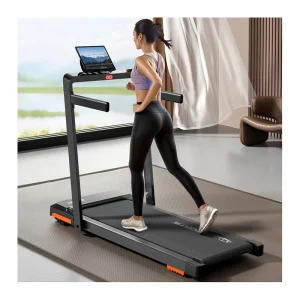
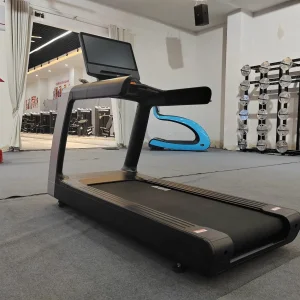
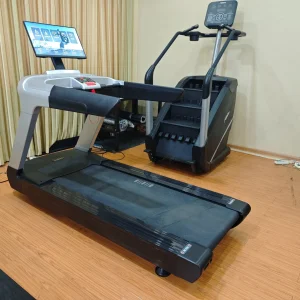
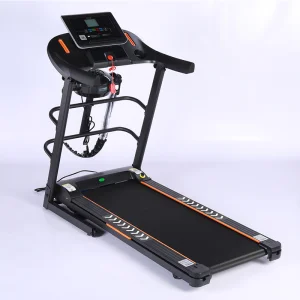
The global Commercial Treadmill market is currently witnessing an unprecedented transformation. As health consciousness shifts from a personal hobby to a corporate and civic responsibility, the demand for industrial-grade fitness equipment has skyrocketed. In 2024, the commercial fitness equipment industry is valued at over USD 15 billion, with treadmills representing the largest segment within the cardio category.
Today's commercial treadmills are no longer just "belts and motors." They are sophisticated IoT (Internet of Things) devices. From high-end health clubs in New York to corporate wellness centers in Tokyo, the expectation for durability, connectivity, and user experience has set a new benchmark for manufacturers and suppliers alike.
Projected 5.4% CAGR through 2030, driven by the rise of luxury boutique gyms and medical rehabilitation centers.
Shift towards high-torque AC motors and heavy-duty steel frames that can withstand 24/7 continuous operation.
Introduction of "Green" treadmills that use self-generated power or energy-efficient low-friction belts.
Modern commercial treadmills are integrating Artificial Intelligence to analyze user gait, heart rate variability, and fitness history. Suppliers are now offering machines that automatically adjust speed and incline based on real-time biometric data, providing a safer and more efficient workout.
The integration of high-definition Android-based touch screens (up to 32 inches) has become standard for top-tier suppliers. Users now expect to run virtual trails in the Swiss Alps or participate in live-streamed classes via platform integration like Netflix, Spotify, and Zwift.
Sensors that detect muscle fatigue and adjust intensity to prevent injury.
Gym owners can monitor machine health and usage stats remotely via centralized software.
Combining motorized power with manual resistance for versatile HIIT training.
Procurement managers for international hotel chains, professional sports teams, and large-scale residential developments have specific requirements when selecting a Commercial Treadmill Supplier. The focus has shifted from "lowest price" to "Total Cost of Ownership" (TCO).
Global Distributors
Countries Served
R&D Experience
Quality Inspected
As a leading Commercial Treadmill Factory based in Shandong, China, we leverage the world's most robust fitness equipment manufacturing ecosystem. Our advantage goes beyond cost-efficiency; it is rooted in engineering precision and supply chain agility.
We provide full customization, from frame colors to custom-coded software interfaces for your brand.
Every treadmill undergoes a 72-hour continuous stress test before shipping to ensure zero-defect delivery.
Located in the manufacturing heart of China, we offer streamlined shipping routes to major global ports.
Shandong PNZ Fitness Co., Ltd. Pilates was founded in 2017 with a singular mission: to design and manufacture high-quality, durable fitness and Pilates equipment that stays true to the authentic methods pioneered by Joseph Pilates. Drawing inspiration from the original Pilates philosophy, we meticulously craft each product to deliver the highest performance and longevity.
Our commitment to excellence is reflected in every aspect of our design and production. Each piece of equipment is constructed using premium materials, including anodized aluminum, beech glulam, birch wood, and the finest faux leather, ensuring not only durability but also an aesthetic quality that enhances the overall user experience.
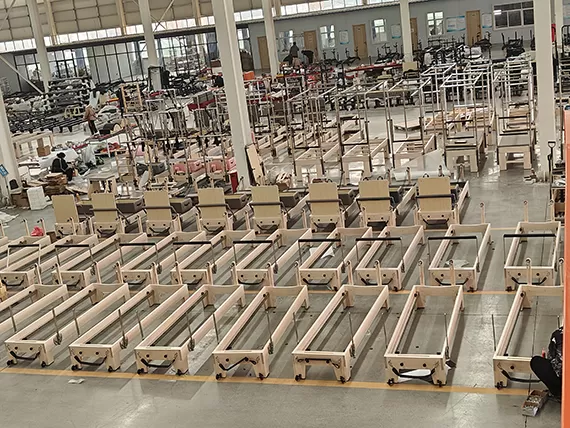
With over 7 years of focused development, PNZ Fitness has rapidly emerged as one of the leading high-end brands in China. We specialize in providing professional solutions, integrating design, development, production, and operations seamlessly. Our vision is to build a solid foundation for long-term enterprise success, underpinned by honesty and faith.
We are committed to helping Pilates studios and individuals achieve their fitness goals.
Constantly evolving, researching, and innovating to improve our equipment.
Ensuring quality, safety, and sustainability at every stage of production.
 PNZ Fitness